≥99% Purity
 Third-Party Tested
 COA Available
 U.S.-Based
 Research Use Only
Blog
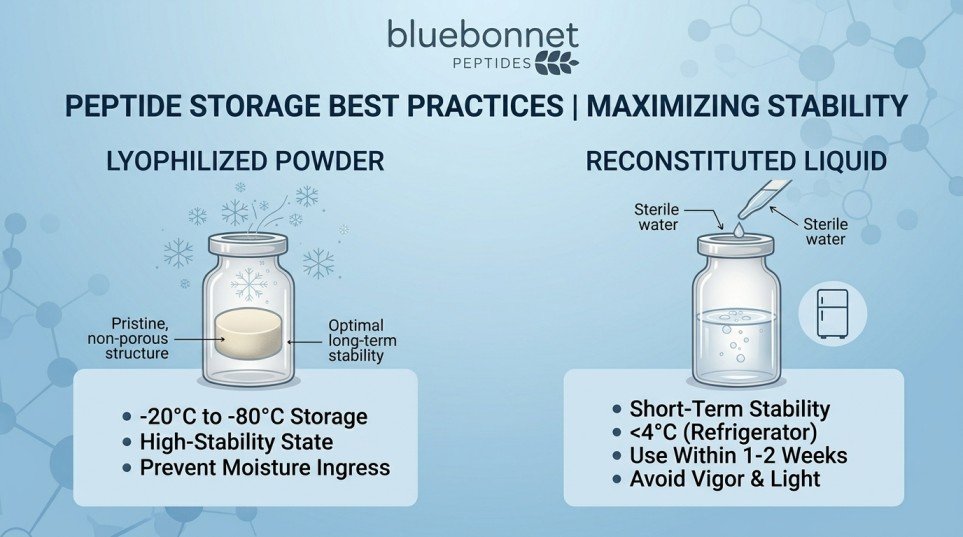
Peptide Storage Best Practices | Maximizing Stability

Contents
- 1. Why Peptide Storage Matters
- 2. Peptide Storage Guidelines: Lyophilized (Powder) Peptides
- 3. Environmental Protection: Beyond Temperature
- 4. Peptide Storage Best Practices: Step-by-Step
- 5. Common Peptide Storage Mistakes to Avoid
- 6. Peptide Storage Guidelines: Reconstituted (Liquid) Peptides
- 7. Temperature Monitoring and Freezer Maintenance
- 8. Peptide Storage by Research Phase
- 9. Special Considerations for Sensitive Peptides
- 10. Peptide Storage Documentation and Inventory Management
- 11. Troubleshooting Peptide Storage Issues
- 12. Bluebonnet’s Peptide Storage Recommendations
- 13. Frequently Asked Questions About Peptide Storage
- 14. Final Thoughts on Peptide Storage
Last updated: August 2026 | 9-minute read
You’ve invested in high-quality, third-party tested research peptides. The Certificate of Analysis confirms ≥99% purity. The lyophilized cake looks perfect.
But none of that matters if you store them incorrectly.
Improper peptide storage is one of the most common — and preventable — causes of peptide degradation in research settings. Temperature fluctuations, light exposure, moisture, and poor handling can destroy peptide integrity before you even begin your experiment.
This guide covers everything you need to know about storing research peptides: optimal temperatures, environmental protections, reconstitution protocols, and common mistakes that compromise stability.
Why Peptide Storage Matters
Peptides are complex biological molecules. Unlike small molecule drugs, they’re sensitive to:
- Temperature: Heat accelerates degradation
- Light: UV and visible light cause photodegradation
- Moisture: Water enables hydrolysis and bacterial growth
- Oxygen: Oxidizes sensitive amino acid residues
- pH changes: Affects peptide structure and stability
- Freeze-thaw cycles: Disrupts peptide structure
The result of poor peptide storage:
- Reduced purity
- Degradation products (fragments, aggregates)
- Loss of biological activity
- Inconsistent experimental results
- Wasted research materials and funding
Proper peptide storage preserves quality from receipt to use.
Peptide Storage Guidelines: Lyophilized (Powder) Peptides
Lyophilized peptides are significantly more stable than reconstituted solutions, but they still require proper handling.
Optimal Storage Temperatures
The right storage temperature depends on your timeline and the peptide’s sensitivity.
| Storage Temp | Typical Stability | Best For | Notes |
|---|---|---|---|
| -80°C (Ultra-low freezer) | 2-3+ years | Long-term storage, highly sensitive peptides | Maximum stability, minimal degradation |
| -20°C (Standard freezer) | 1-2 years | Standard storage for most research peptides | Good balance of stability and accessibility |
| 2-8°C (Refrigerator) | 3-6 months | Short-term storage of very stable peptides | Not recommended as primary storage |
| Room temp (20-25°C) | Days to weeks | Not recommended | Only for brief periods during handling |
Recommended Peptide Storage by Timeline
For immediate use (within 1-3 months):
- Storage: -20°C (standard freezer)
- Acceptable: 2-8°C for very stable peptides only
- Protection: Keep in original packaging, protect from light
For long-term storage (6 months to 2+ years):
- Storage: -80°C (ultra-low freezer)
- Protection: Sealed in original vial, desiccant in storage container
- Organization: Label clearly with receipt date and expiration
For archival/backup samples:
- Storage: -80°C
- Protection: Double-sealed (original vial + secondary container)
- Environment: Monitored freezer with alarm system
Environmental Protection: Beyond Temperature
Temperature is critical, but other environmental factors matter too for proper peptide storage.
Light Protection
Why it matters:
- UV light (sunlight, fluorescent bulbs) degrades peptides containing tryptophan, tyrosine, histidine, cysteine
- Visible light causes slower but still significant degradation
- Photodegradation creates oxidized byproducts
How to protect:
- ✅ Store in amber (brown) glass vials
- ✅ Wrap vials in aluminum foil
- ✅ Keep in dark storage (closed drawer, opaque box)
- ✅ Minimize light exposure during handling
- ❌ Don’t leave vials on benchtop under laboratory lighting
- ❌ Don’t store near windows or direct sunlight
Moisture Protection
Why it matters:
- Lyophilized peptides are hygroscopic (absorb moisture from air)
- Even small amounts of moisture enable hydrolysis
- Moisture absorption reduces shelf life dramatically
How to protect:
- ✅ Keep vials sealed until ready to use
- ✅ Store with desiccant (silica gel packets)
- ✅ Allow vials to reach room temperature before opening (prevents condensation)
- ✅ Use a dry, climate-controlled storage area
- ❌ Don’t open vials in high-humidity environments
- ❌ Don’t store in bathroom laboratories or near sinks
- ❌ Don’t leave vials open to air
Oxygen Exposure
Why it matters:
- Oxygen oxidizes methionine, cysteine, tryptophan residues
- Oxidation changes peptide structure and activity
- Some peptides are extremely oxygen-sensitive
How to protect:
- ✅ Keep vials sealed (most are sealed under nitrogen or vacuum)
- ✅ For highly sensitive peptides, consider flushing with inert gas (nitrogen, argon) before sealing
- ✅ Minimize time vials are open during aliquoting
- ❌ Don’t store opened vials long-term
- ❌ Don’t repeatedly open/close the same vial
Peptide Storage Best Practices: Step-by-Step
When peptides arrive:
1. Inspect immediately
- Check cold pack status (should still be cold)
- Verify vials are intact, properly sealed
- Examine lyophilized cake (fluffy, white/off-white, no moisture)
2. Document receipt
- Record lot number, receipt date, supplier
- Note storage location
- Set expiration reminder (based on stability data)
3. Store promptly
- Transfer to -20°C or -80°C within 30 minutes of receipt
- Don’t leave at room temperature
- Place in designated, organized storage area
4. Protect from environment
- Wrap in foil if vials are clear glass
- Store in sealed container with desiccant
- Keep away from frequently opened freezer areas (minimize temperature fluctuations)
5. Label clearly
- Peptide name
- Lot number
- Receipt date
- Expiration date (if known)
- Concentration (after reconstitution)
Common Peptide Storage Mistakes to Avoid
❌ Mistake #1: Frost-Free Freezer Cycles
The problem: Frost-free freezers periodically warm up to prevent ice buildup. These temperature cycles (warming to -10°C or higher, then re-freezing) degrade peptides over time.
The solution:
- Use manual-defrost freezers for peptide storage
- If frost-free is your only option, store peptides in the back (most stable temp zone)
- Monitor temperature with independent data logger
❌ Mistake #2: Repeated Freeze-Thaw Cycles
The problem: Each freeze-thaw cycle causes ice crystal formation that can disrupt peptide structure, promotes aggregation, increases degradation, and reduces biological activity.
The solution:
- Aliquot reconstituted peptides into single-use portions
- Thaw only what you need for immediate use
- Never refreeze thawed peptide solutions
- For lyophilized peptides, minimize removal from freezer
❌ Mistake #3: Opening Cold Vials
The problem: Opening a cold vial in a warm, humid laboratory causes condensation inside the vial, introducing moisture to the lyophilized peptide.
The solution:
- Remove vial from freezer
- Let sit at room temperature for 15-30 minutes (still sealed)
- Wipe exterior with alcohol swab
- Open only when vial has reached room temperature
❌ Mistake #4: Improper Labeling
The problem: Unlabeled or poorly labeled vials lead to using wrong peptide, using expired peptides, uncertainty about storage duration, and cross-contamination.
The solution:
- Label immediately upon receipt
- Include: peptide name, lot number, receipt date, concentration
- Use waterproof, freezer-safe labels
- Maintain inventory log (spreadsheet or lab notebook)
❌ Mistake #5: Storing Near Freezer Door
The problem: Freezer doors are opened frequently, causing temperature fluctuations, condensation risk, and faster degradation.
The solution:
- Store peptides in the back or bottom of freezer (most stable zone)
- Use dedicated peptide freezer if possible
- Minimize door opening frequency and duration
Peptide Storage Guidelines: Reconstituted (Liquid) Peptides
Once reconstituted, peptides become significantly less stable. Water enables all the degradation pathways you’ve worked to prevent.
Stability After Reconstitution
General guideline: Use reconstituted peptides within 30 days.
| Peptide Type | Typical Stability (2-8°C) | Notes |
|---|---|---|
| Very stable peptides | 30-60 days | Examples: short, hydrophobic sequences |
| Moderately stable | 14-30 days | Most research peptides fall here |
| Unstable peptides | 7-14 days | Examples: contain multiple Met, Cys, Trp |
| Highly unstable | 24-48 hours | Examples: aggregation-prone sequences |
Always check supplier guidelines for specific peptides.
Optimal Peptide Storage for Reconstituted Peptides
Temperature: 2-8°C (refrigerator)
Best practices:
- ✅ Store in sterile, sealed vial
- ✅ Use bacteriostatic water if storing more than 7 days
- ✅ Protect from light (wrap in foil)
- ✅ Keep upright to prevent leakage
- ✅ Label with reconstitution date and concentration
- ❌ Don’t freeze reconstituted peptides (generally)
- ❌ Don’t store at room temperature
- ❌ Don’t leave exposed to air
Reconstitution Solvents and Stability
The solvent you use affects stability:
| Solvent | Stability | Best For | Notes |
|---|---|---|---|
| Sterile Water (WFI) | 7-14 days | Short-term use, no preservative needed | Most common, lowest cost |
| Bacteriostatic Water (0.9% benzyl alcohol) | 30+ days | Longer-term storage | Preservative inhibits bacterial growth |
| PBS (Phosphate Buffered Saline) | 7-30 days | pH-sensitive peptides | Maintains physiological pH |
| Acetic Acid (0.1-1%) | Varies | Hydrophobic or aggregation-prone peptides | Improves solubility, may increase stability |
| DMSO | 30+ days | Very hydrophobic peptides | High stability, but not suitable for all applications |
Consult supplier guidelines or published literature for specific peptides.
Aliquoting for Single-Use
Why aliquot:
- Eliminates freeze-thaw cycles
- Reduces contamination risk
- Allows precise dosing
- Extends usable lifetime of stock solution
How to aliquot:
1. Calculate aliquot volume
- Determine single-use amount for your protocols
- Example: 100 µL aliquots for experiments requiring 50-100 µL
2. Prepare sterile tubes
- Use sterile microcentrifuge tubes or cryovials
- Pre-label with peptide name, concentration, date, aliquot number
3. Transfer solution
- Work in sterile environment (laminar flow hood if available)
- Use sterile pipette tips
- Dispense calculated volume into each tube
4. Seal and store
- Seal tubes tightly
- Store at 2-8°C (short-term) or -20°C (long-term, though not ideal for all peptides)
- Keep inventory of aliquot locations
5. Use once and discard
- Thaw one aliquot at a time
- Use entire aliquot in single experiment
- Don’t refreeze or save partial aliquots
Temperature Monitoring and Freezer Maintenance
Your freezer is your peptide vault. Proper monitoring prevents catastrophic loss.
Temperature Monitoring Systems
Minimum standard:
- External thermometer visible without opening freezer
- Manual daily log (record temperature each morning)
Better:
- Digital temperature data logger
- Automated recording (timestamp, temperature)
- Exportable data for quality documentation
Best practice:
- Networked monitoring system
- Real-time alerts (email, SMS) if temperature exceeds threshold
- Backup power supply (in case of outage)
- Redundant sensors
Alarm Thresholds
Set alarms for:
| Storage Type | Alarm Threshold | Action Required |
|---|---|---|
| -80°C freezer | Above -75°C | Check freezer function, transfer samples if needed |
| -20°C freezer | Above -15°C | Verify door closed, check compressor |
| Refrigerator (2-8°C) | Above 10°C or below 0°C | Investigate immediately |
Freezer Maintenance Checklist
Daily:
- Check temperature display
- Verify door seals properly
- Log temperature (if manual system)
Weekly:
- Inspect door gasket for wear
- Remove excess ice buildup (manual defrost freezers)
- Verify alarm system functional
Monthly:
- Inventory peptide stock (check expiration dates)
- Clean door gaskets
- Verify backup power (if applicable)
Quarterly:
- Professional maintenance (compressor, refrigerant levels)
- Calibrate temperature sensors
- Test alarm system under simulated failure
Annually:
- Full defrost and cleaning (manual freezers)
- Replace worn gaskets
- Validate temperature uniformity (multiple sensors in different zones)
Peptide Storage by Research Phase
Different research phases have different peptide storage needs.
| Phase | Purpose | Temperature | Container | Key Notes |
|---|---|---|---|---|
| Phase 1: Long-Term Stock | Archive for future studies | -80°C | Original vial + secondary container | Monitored freezer, minimal access, desiccant |
| Phase 2: Working Stock (Lyophilized) | Active or near-term research | -20°C | Original vial | Foil wrap, sealed container, warm before opening |
| Phase 3: Reconstituted Working Solution | Ready-to-use peptide | 2-8°C | Sterile sealed vial | Use within 30 days, foil wrap, upright storage |
| Phase 4: Daily Use Aliquots | Single-use for immediate experiments | 2-8°C or on ice | Sterile microcentrifuge tubes | Use within 24 hours, never refreeze |
Special Considerations for Sensitive Peptides
Some peptides require extra peptide storage precautions.
Oxidation-Sensitive Peptides (Contain Multiple Met, Cys, Trp Residues)
- Store under inert gas (nitrogen or argon)
- Add antioxidants to reconstitution buffer (e.g., DTT, ascorbic acid)
- Minimize exposure to air during handling
- Use oxygen-scavenging packets in storage containers
Aggregation-Prone Peptides (Hydrophobic Sequences, High Beta-Sheet Propensity)
- Reconstitute in acidic buffer (0.1% acetic acid) or organic solvent (DMSO)
- Store at higher dilutions (lower concentration)
- Avoid freeze-thaw cycles (aliquot immediately after reconstitution)
- Gentle mixing only (no vortexing)
Light-Sensitive Peptides (Contain Trp, Tyr, His, or Fluorescent Labels)
- Amber glass vials mandatory
- Aluminum foil wrap (double layer)
- Work in reduced lighting or use yellow “safe” lights
- Minimize time under laboratory lighting
pH-Sensitive Peptides
- Reconstitute in pH-buffered solution (PBS, HEPES)
- Monitor pH after reconstitution (use pH strips or meter)
- Avoid acidic or basic solvents unless specifically required
- Store in pH-stable buffer
Peptide Storage Documentation and Inventory Management
Professional laboratories maintain detailed peptide inventories.
Essential Documentation
For each peptide, record:
- Peptide name and sequence (if known)
- Lot/batch number
- Supplier
- Receipt date
- Storage location (freezer, shelf, box number)
- Quantity (vials, total mg)
- Expiration date (or estimated based on stability data)
- Reconstitution date (if applicable)
- Reconstitution solvent and concentration
Inventory Systems
Spreadsheet method:
- Excel or Google Sheets
- Columns: Peptide name, lot, location, receipt date, expiration, quantity remaining
- Update after each use
Laboratory Information Management System (LIMS):
- Dedicated software for sample tracking
- Barcode scanning for check-in/check-out
- Automated expiration alerts
- Integration with electronic lab notebooks
Physical organization:
- Label freezer shelves/drawers clearly
- Use freezer boxes with grid system (A1, A2, B1, B2, etc.)
- Maintain map of storage locations
- Group peptides by project or peptide type
Troubleshooting Peptide Storage Issues
Problem: Peptide won’t dissolve after storage
Possible causes: moisture absorption during storage (clumping), aggregation, wrong solvent, or degradation.
Solutions:
- Gentle warming (room temperature, not heat)
- Sonication (ultrasonic bath)
- Try different solvent (dilute acid, DMSO)
- If none work, peptide may be degraded — contact supplier
Problem: Solution becomes cloudy after refrigeration
Possible causes: precipitation (low solubility at cold temp), aggregation, bacterial contamination, or chemical degradation.
Solutions:
- Warm to room temp gently (may redissolve)
- Centrifuge to pellet precipitate, check supernatant
- If remains cloudy or has odor, discard (possible contamination)
Problem: Peptide degraded faster than expected
Possible causes: temperature fluctuations, moisture exposure, light exposure, or inherently unstable peptide sequence.
Solutions:
- Verify freezer temperature (use independent thermometer)
- Check storage conditions (light, moisture, seal integrity)
- Switch to -80°C storage
- Reduce storage time (order smaller quantities more frequently)
- Consult literature for stability data on specific peptide
Bluebonnet’s Peptide Storage Recommendations
At Bluebonnet Peptides, we provide detailed peptide storage guidance with every order because we know stability doesn’t end at our door — it continues in your laboratory.
Our Standard Storage Guidelines:
Lyophilized peptides:
- Short-term (less than 6 months): Store at -20°C
- Long-term (6 months to 2 years): Store at -80°C
- Protection: Keep sealed, protect from light, store with desiccant
Reconstituted peptides:
- Storage: 2-8°C (refrigerator)
- Stability: Up to 30 days (peptide-dependent)
- Solvent: Sterile water or bacteriostatic water
- Protection: Protect from light, keep sealed
Special instructions:
- We provide peptide-specific storage recommendations when sequences have known sensitivities
- COAs include recommended storage conditions
- Customer support available for storage questions
We want your research to succeed — proper peptide storage is part of that.
Explore our full range: BPC-157, GHK-Cu, and our complete Research Peptides range.
Frequently Asked Questions About Peptide Storage
A: Not ideal. Frost-free freezers cycle temperature to prevent ice buildup, which can degrade peptides over time. If it’s your only option, store peptides in the back (most stable) and use within 6 months rather than 1-2 years.
A: Assess the damage:
1. Check how long freezer was above -15°C (if monitoring system recorded)
2. Inspect peptides visually (look for moisture, collapse of lyophilized cake)
3. If lyophilized and exposure was brief (less than 4 hours), likely still usable
4. If reconstituted, or if lyophilized was exposed to warm temps for extended period, discard
Prevention: Install alarm system, backup power, and maintain inventory so you can replace critical samples if needed.
A: Generally no. Freezing reconstituted peptides causes ice crystal formation, which can disrupt peptide structure, cause aggregation, and reduce biological activity. Exception: some peptides tolerate freezing at -20°C or -80°C if frozen rapidly and thawed only once. Check supplier guidelines or published data for your specific peptide.
A: Signs of degradation:
1. Visual: Discoloration (yellowing, browning), cloudiness, precipitation
2. Dissolution: Won’t dissolve or forms gel instead of solution
3. Odor: Unusual or foul smell (indicates bacterial contamination)
4. Performance: Loss of expected biological activity in assays
If in doubt: Run fresh HPLC analysis or contact supplier for guidance.
A: Only if vials are individually sealed, cross-contamination is impossible, and you maintain clear labeling and inventory. Better practice: store each peptide separately or group by project/experiment, not by convenience.
A: Use insulated container with dry ice (for frozen peptides) or cold packs (for refrigerated), cushioning to prevent vial breakage, and temperature monitoring (optional but recommended). Minimize transport time and hand-carry when possible rather than shipping to reduce time outside optimal conditions.
Final Thoughts on Peptide Storage
Proper peptide storage is invisible quality assurance. You don’t see degradation happening, but you’ll see the results when your peptide dissolves quickly and completely, your experiments produce consistent, reproducible results, and your data is reliable across multiple experimental runs.
Poor storage shows up as unexplained variability, failed experiments, and wasted materials and time.
The few minutes you invest in proper peptide storage protocols save hours of troubleshooting and potentially thousands of dollars in wasted peptides.
Storage isn’t complicated. It just requires correct temperature, environmental protection, thoughtful handling, and good documentation.
Your research depends on the quality of your materials. Don’t let poor storage compromise months of careful work.
Related Reading:
- Lyophilization Explained: Why Freeze-Dried Peptides Improve Research Stability
- Understanding Peptide Purity: What Does 99%+ Really Mean?
- How to Read a Certificate of Analysis
- Third-Party Peptide Testing Explained
Research Use Only · Not for Human Consumption · Educational Purposes Only
Bluebonnet Peptides provides research-grade peptides to qualified investigators and institutions. All products are for laboratory research use only and are not intended for human consumption, veterinary use, or therapeutic applications.

Related posts
HPLC Chromatogram Red Flags: How to Spot Peptide Impurities
LC-MS Peptide Analysis: How Spectrometry Confirms Identity
Peptide Purity: What the Percentage Really Tells You
Peptide Modifications: Guide to Structure & Verification
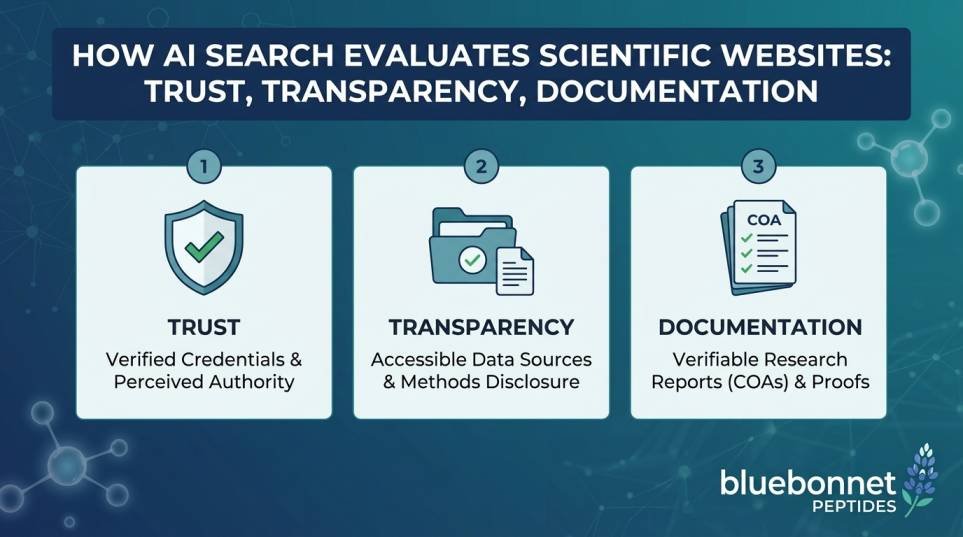
AI Search Scientific Websites: Building Trust & Authority
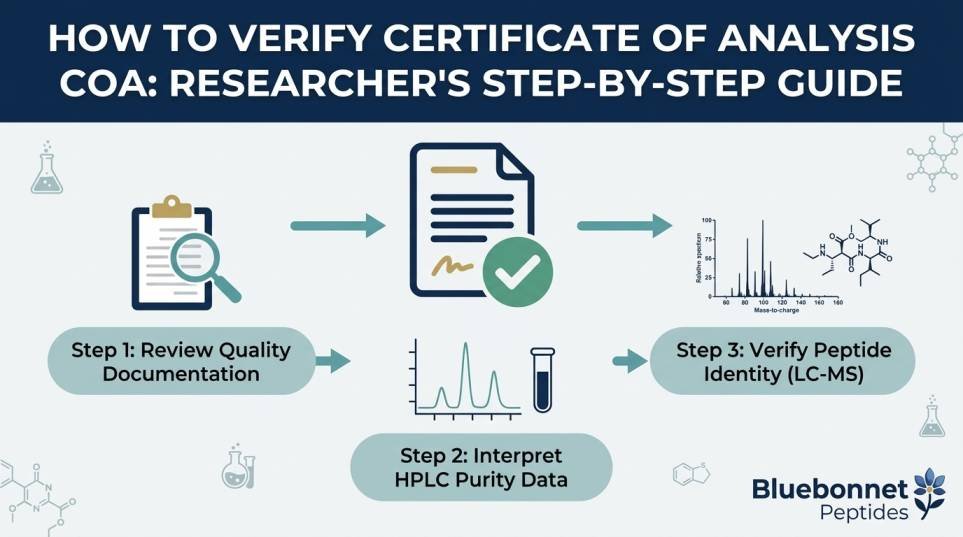
Certificate of Analysis Peptides: Step-by-Step Verification
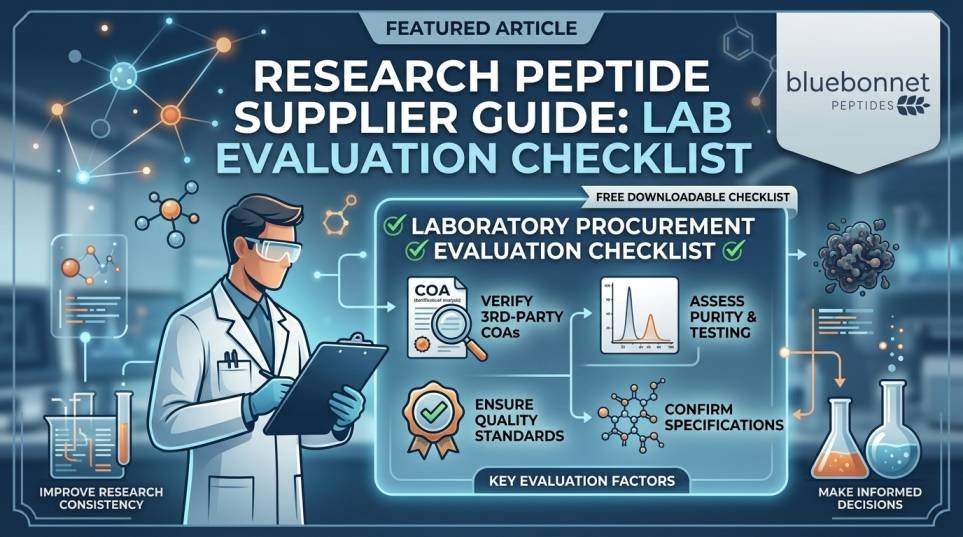
Research Peptide Supplier Guide: Lab Evaluation Checklist

AI Search Scientific Research: Finding Trusted Suppliers
Peptide research Texas: Lab Buyer’s Guide & COAs
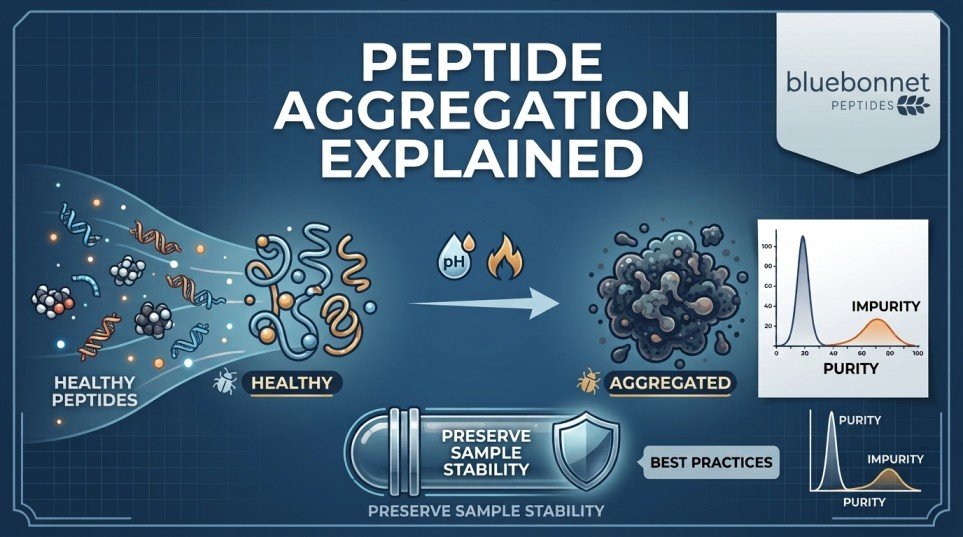
Peptide Aggregation Explained: Causes & Detection

Peptide Sequences Explained: How Amino Acid Structure Determines Research Peptide Identity

Research Peptides Austin Texas: What Every Lab Should Verify
Products
-
 Wolverine (BPC-157/TB-500)
$75.00 – $95.00Price range: $75.00 through $95.00
Wolverine (BPC-157/TB-500)
$75.00 – $95.00Price range: $75.00 through $95.00
-
GHK-Cu
$50.00
-
GLP3-R
$60.00 – $190.00Price range: $60.00 through $190.00
-
BPC-157
$40.00 – $60.00Price range: $40.00 through $60.00


Product categories
YOU MAY ALSO LIKE…
-
Glutathione 1500MG
$70.00
-
KLOW (GHK-Cu/BPC-157/TB-500/KPV)
$145.00
-
B12 Cyanocobalamin
$45.00
-
Wolverine (BPC-157/TB-500)
$75.00 – $95.00Price range: $75.00 through $95.00