≥99% Purity
 Third-Party Tested
 COA Available
 U.S.-Based
 Research Use Only


Last updated: August 2026 | 14-minute read
You’re comparing peptides from two suppliers. Both are labeled “Thymosin Beta-4.” The prices are similar. The purity percentages look comparable. But one supplier’s Certificate of Analysis shows a molecular weight of 4963 Da, while the other shows 5004 Da.
Which one is correct? Are they even the same peptide?
The answer lies in something the product names don’t reveal: chemical modifications. One peptide is unmodified (free N-terminus and C-terminus), while the other is acetylated at the N-terminus, adding 42 Da to the molecular weight. These are molecularly distinct compounds with different structures, different analytical signatures, and potentially different research characteristics.
Peptide modifications — structural changes beyond the base amino acid sequence — are common in research peptides but frequently poorly documented or misunderstood. Modifications can occur at the N-terminus, C-terminus, or amino acid side chains. They can be intentional (added during synthesis for specific purposes) or unintentional (degradation products or synthesis artifacts). They fundamentally alter the peptide’s molecular identity.
Understanding modifications matters because:
- Modified and unmodified versions of the “same” peptide are different compounds
- Modifications change molecular weight, requiring adjusted identity verification
- Modifications affect analytical behavior in HPLC and LC-MS
- Documentation must clearly specify modifications for accurate identification
- Research reproducibility requires knowing exact molecular structure
This comprehensive guide explains common peptide modifications, why they’re used, how they affect molecular structure and weight, how they’re detected analytically, and why complete documentation of modifications is essential for research integrity.
Whether you’re verifying supplier documentation, calculating expected molecular weights for LC-MS comparison, designing procurement specifications, or ensuring protocol reproducibility, this article provides the framework for understanding peptide modifications as fundamental aspects of molecular identity.
What Are Peptide Modifications?
Peptide modifications are chemical changes to a peptide’s structure beyond the standard amino acid sequence.
Base Sequence Versus Modified Structure
Unmodified peptide: Contains only the amino acids specified in the sequence, with:
- Free amino group (NH₂) at N-terminus
- Free carboxyl group (COOH) at C-terminus
- Standard amino acid side chains
Modified peptide: Contains the base amino acid sequence plus additional chemical groups or structural changes at:
- N-terminus
- C-terminus
- Amino acid side chains
- Internal peptide backbone
Critical distinction: Two peptides with identical amino acid sequences but different modifications are molecularly distinct compounds with different:
- Molecular weights
- Chemical properties
- Analytical signatures
- Potentially different research behavior
Example:
- Peptide A: Gly-Leu-Asp-Lys-Ala (unmodified)
- Peptide B: Ac-Gly-Leu-Asp-Lys-Ala (N-terminal acetylation)
Same amino acid sequence, different molecular structures, different identities.
Why Peptides Are Modified
Modifications serve various purposes:
- Mimicking natural structures: Many naturally occurring peptides are modified (acetylated, amidated, etc.). Synthesizing modified versions creates structures matching natural peptides.
- Improving stability: Some modifications protect against enzymatic degradation or chemical breakdown.
- Altering solubility: Modifications can increase or decrease hydrophobicity, affecting solubility characteristics.
- Blocking reactive groups: N-terminal acetylation blocks the free amino group, preventing unwanted reactions.
- Research tool development: Specific modifications enable conjugation to labels, surfaces, or other molecules.
- Synthesis artifacts: Some modifications are unintended consequences of synthesis procedures requiring removal during purification.
Types of Modifications
Modifications are categorized by location and type:
Terminal modifications:
- N-terminal modifications (acetylation, formylation, biotinylation)
- C-terminal modifications (amidation, esterification)
Side chain modifications:
- Amino acid-specific modifications (phosphorylation, methylation, glycosylation)
- Disulfide bond formation (cysteine)
- Oxidation (methionine, tryptophan)
Backbone modifications:
- D-amino acid incorporation
- N-methylation
- Peptoid residues
Conjugation:
- PEGylation (polyethylene glycol attachment)
- Lipidation (fatty acid attachment)
- Fluorescent label attachment
Each modification type affects molecular weight differently and requires specific documentation.
Related Reading: Peptide Sequences Explained
Common N-Terminal Modifications
The N-terminus (peptide beginning) is a frequent modification site.
Acetylation (Ac-)
What it is: Addition of an acetyl group (CH₃CO-) to the N-terminal amino group.
Chemical structure: CH₃-CO-NH-[peptide sequence]
Molecular weight change: +42.04 Da (adds C₂H₂O)
Notation: Written as Ac- prefix before sequence
Example: Ac-Gly-Leu-Asp-Lys-Ala
Why it’s used:
- Natural structure mimicking: Many endogenous peptides are naturally N-acetylated. Acetylation creates research tools matching natural structure.
- Increased stability: Blocks free amino group, reducing susceptibility to aminopeptidase degradation.
- Reduced aggregation: Can reduce aggregation tendency for some peptide sequences.
- Altered properties: Increases hydrophobicity slightly, affecting solubility and analytical behavior.
Detection:
- Molecular weight: LC-MS shows molecular weight 42 Da higher than unmodified peptide.
- HPLC retention: Acetylated peptides typically elute slightly later (more hydrophobic) than unacetylated versions in reverse-phase HPLC.
Example:
- Peptide: GHRP-6
- Unmodified sequence: His-D-Trp-Ala-Trp-D-Phe-Lys-NH₂
- Unmodified MW: ~872 Da
- Acetylated: Ac-His-D-Trp-Ala-Trp-D-Phe-Lys-NH₂
- Acetylated MW: ~914 Da (872 + 42)
The 42 Da difference clearly distinguishes acetylated from unacetylated versions in LC-MS.
Formylation (For-)
What it is: Addition of formyl group (HCO-) to N-terminal amino group.
Molecular weight change: +28.01 Da
Why it’s used: Less common than acetylation; sometimes used for specific research applications or can be synthesis artifact.
Detection: 28 Da molecular weight increase versus unmodified peptide.
Biotinylation
What it is: Attachment of biotin molecule to N-terminus (or sometimes lysine side chain).
Molecular weight change: +226.3 Da (biotin)
Why it’s used:
- Affinity purification: Biotin binds streptavidin, enabling peptide capture and purification.
- Detection systems: Streptavidin conjugates enable detection of biotinylated peptides in assays.
- Immobilization: Biotin-streptavidin enables peptide immobilization to surfaces.
Detection: Large molecular weight increase (226 Da) easily detected by LC-MS.
Fluorescent Labels
What they are: Fluorescent molecules (FITC, rhodamine, Cy dyes, etc.) attached to N-terminus.
Molecular weight change: Varies by label (typically +300-700 Da or more)
Why they’re used:
- Visualization: Enable fluorescence microscopy or flow cytometry detection.
- Tracking: Allow peptide localization studies.
- Binding assays: Enable fluorescence-based binding measurements.
Detection: Significant molecular weight increase; some labels also detectable by UV-Vis spectroscopy.
Common C-Terminal Modifications
The C-terminus (peptide end) is another frequent modification site.
Amidation (-NH₂)
What it is: C-terminal carboxyl group (COOH) replaced with amide group (CONH₂).
Molecular weight change: -0.98 Da (technically replaces -OH with -NH₂: -17.01 + 16.03)
Notation: Written as -NH₂ suffix after sequence
Example: Gly-Leu-Asp-Lys-Ala-NH₂
Why it’s used:
- Natural structure: Many endogenous bioactive peptides are naturally C-amidated (oxytocin, vasopressin, many neuropeptides).
- Increased stability: Blocks carboxypeptidase degradation.
- Altered properties: Eliminates negative charge from C-terminal carboxyl, affecting peptide charge state and potentially activity.
Detection:
- Molecular weight: LC-MS shows ~1 Da lower mass than free acid form (though small difference requires high-resolution MS).
- Analytical behavior: C-amidated peptides may show different HPLC retention and LC-MS ionization compared to free acid forms.
Common peptides with C-terminal amidation: Many research peptides are naturally amidated:
- Oxytocin: Cys-Tyr-Ile-Gln-Asn-Cys-Pro-Leu-Gly-NH₂
- GHRP-6: His-D-Trp-Ala-Trp-D-Phe-Lys-NH₂
- Many others
If documentation doesn’t specify amidation status, identity is ambiguous.
Esterification
What it is: C-terminal carboxyl group converted to ester (typically methyl or ethyl ester).
Molecular weight change: +14.03 Da (methyl ester), +28.05 Da (ethyl ester)
Why it’s used:
- Increased membrane permeability: Ester forms are more lipophilic, potentially improving cellular uptake (though esterified peptides may be cleaved by esterases).
- Synthesis intermediate: Sometimes used during synthesis, should be removed in final product unless intentionally retained.
Detection: Molecular weight increase (14 or 28 Da) detected by LC-MS.
Free Acid (COOH)
What it is: Unmodified C-terminal carboxyl group (standard form).
Notation: Often not explicitly noted, assumed unless amidation or esterification specified. Some documentation explicitly indicates: Gly-Leu-Asp-Lys-Ala-OH (clarifying free acid, not amidated)
Important: Amidated versus free acid forms are different compounds. If product name or documentation doesn’t clarify C-terminal modification status, molecular identity is ambiguous. Always verify.

PEGylation and Other Conjugations
Larger modifications involve attaching polymers or other substantial molecules.
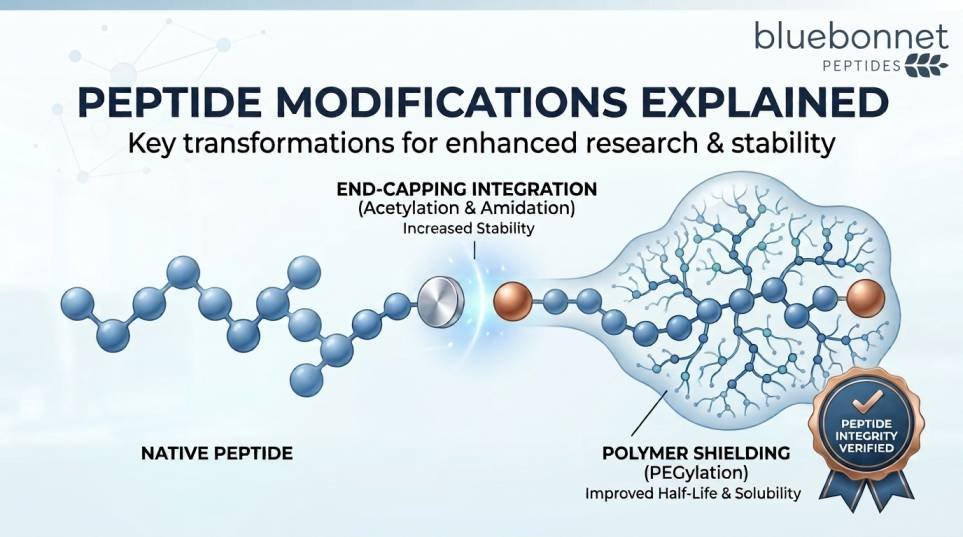
PEGylation
What it is: Attachment of polyethylene glycol (PEG) polymer chain to peptide.
Attachment sites:
- N-terminus (most common)
- Lysine side chain amino groups
- Cysteine side chain (through thiol)
- Other reactive sites
Molecular weight change: Variable and substantial: +500 Da to +40,000 Da or more depending on PEG size
Common PEG sizes:
- PEG2000 (~2,000 Da)
- PEG5000 (~5,000 Da)
- PEG20000 (~20,000 Da)
- Others
Notation: PEG-[peptide sequence] or [peptide sequence]-PEG, with PEG size specified
Example: PEG2000-Gly-Leu-Asp-Lys-Ala
Why it’s used:
- Increased circulation time: PEG increases hydrodynamic size, reducing renal clearance in in vivo studies.
- Reduced immunogenicity: PEG can shield peptide from immune recognition.
- Improved solubility: PEG is highly hydrophilic, increasing aqueous solubility.
- Altered pharmacokinetics: Dramatically changes distribution, metabolism, and clearance.
Detection:
- Molecular weight: LC-MS shows massive molecular weight increase. PEGylated peptides appear at much higher m/z values.
- HPLC behavior: Dramatically altered retention and peak shape compared to unmodified peptide.
- Heterogeneity: PEG preparations often have molecular weight distribution, creating multiple peaks in analytical methods.
Critical documentation requirement: PEGylation status and PEG size must be clearly documented. PEGylated and non-PEGylated versions are completely different compounds with entirely different properties.
Example:
- Peptide: Exenatide-4 (hypothetical)
- Unmodified MW: ~4,000 Da
- PEG5000-Exenatide-4 MW: ~9,000 Da (4,000 + 5,000)
The molecular weight difference makes these unmistakably different compounds analytically.
Lipidation
What it is: Attachment of fatty acid (lipid) chains to peptide.
Common lipid modifications:
- Palmitoylation (C16 fatty acid, +238 Da)
- Myristoylation (C14 fatty acid, +210 Da)
- Other fatty acids of varying lengths
Attachment sites:
- N-terminus
- Lysine side chains
- Cysteine side chains
Why it’s used:
- Membrane association: Lipid chains promote membrane binding and potentially cellular uptake.
- Altered distribution: Changes pharmacokinetic behavior in vivo.
- Albumin binding: Fatty acids can promote binding to serum albumin, affecting circulation time.
Detection:
- Molecular weight: LC-MS shows increase corresponding to fatty acid molecular weight.
- HPLC retention: Significantly increased retention time in reverse-phase HPLC (much more hydrophobic).
Example:
- Peptide: Ala-Gly-Leu-Asp
- Unmodified MW: ~402 Da
- Palmitoyl-Ala-Gly-Leu-Asp MW: ~640 Da (402 + 238)
Other Conjugations
Additional modifications encountered in research peptides:
- Fluorescent labels: FITC, FAM, rhodamine, Cy3, Cy5, etc. (+300-700 Da typical)
- Radioactive labels: Iodination, tritiation (minimal mass change, detected by radioactivity)
- Affinity tags: Biotin, His-tag, FLAG-tag (various molecular weights)
- Crosslinkers: Molecules enabling peptide conjugation to other molecules or surfaces
Each conjugation type requires explicit documentation including:
- Type of modification
- Attachment site(s)
- Molecular weight contribution
- Any heterogeneity in modification
Side Chain Modifications
Amino acid side chains can be modified intentionally or unintentionally.
Disulfide Bond Formation
What it is: Covalent bond between two cysteine (Cys) residues via their sulfur atoms.
Types:
- Intramolecular (within same peptide): Forms cyclic structure, constraining peptide conformation.
- Intermolecular (between peptides): Links multiple peptide molecules (can cause aggregation).
Molecular weight change: -2.02 Da per disulfide bond (loss of 2 hydrogen atoms)
Why it occurs:
- Intentional: Many peptides naturally contain disulfide bonds critical for structure/activity (oxytocin, insulin, many others).
- Unintentional: Oxidation during storage or handling can form unwanted disulfides.
Detection:
- Reducing vs. non-reducing conditions: LC-MS under reducing conditions (with DTT or β-mercaptoethanol) breaks disulfides, showing reduced molecular weight. Non-reducing conditions preserve disulfides.
- Intramolecular disulfides: Show characteristic molecular weight (~2 Da lower than fully reduced form).
- Intermolecular disulfides: Appear as dimers, trimers, etc. (multiples of monomer molecular weight minus 2 Da per disulfide).
Documentation importance: For cysteine-containing peptides, disulfide bond status (which cysteines are bonded, if any) must be documented. Different disulfide connectivity creates different peptide structures.
Example: Oxytocin: Cys-Tyr-Ile-Gln-Asn-Cys-Pro-Leu-Gly-NH₂
Contains intramolecular disulfide between Cys1 and Cys6, creating cyclic structure critical for activity. Oxidized intermolecularly (linking multiple oxytocin molecules) would create inactive aggregates.
Related Reading: Peptide Storage Best Practices
Phosphorylation
What it is: Addition of phosphate group (PO₃²⁻) to serine, threonine, or tyrosine side chains.
Molecular weight change: +79.97 Da per phosphorylation
Why it’s used:
- Mimicking post-translational modifications: Many proteins are naturally phosphorylated for regulation. Phospho-peptides serve as research tools studying phosphorylation-dependent processes.
- Signaling studies: Phosphorylated peptides used in kinase/phosphatase research.
Detection: 80 Da molecular weight increase per phosphate group; phospho-peptides often show altered HPLC retention.
Methylation
What it is: Addition of methyl groups (CH₃) to lysine or arginine side chains (or N-terminus).
Molecular weight change: +14.03 Da per methyl group
Types:
- Monomethylation (+14 Da)
- Dimethylation (+28 Da)
- Trimethylation (+42 Da)
Why it’s used: Research into epigenetic regulation, histone modifications, protein-protein interactions.
Detection: Molecular weight increase detected by LC-MS; methylated peptides may show altered HPLC behavior.
Oxidation (Unintentional Modification)
What it is: Oxidative damage to amino acids, particularly:
- Methionine (Met): Oxidizes to methionine sulfoxide (+16 Da) or methionine sulfone (+32 Da)
- Tryptophan (Trp): Oxidizes to various products (typically +16 Da or +32 Da)
- Cysteine (Cys): Oxidizes to cysteic acid (+48 Da) or forms disulfides (see above)
- Tyrosine (Tyr): Can form di-tyrosine crosslinks under oxidative stress
Why it occurs: Oxidation is typically unintentional degradation caused by:
- Oxygen exposure during storage
- Light exposure (photo-oxidation)
- Transition metal contamination
- Reactive oxygen species
Detection:
- LC-MS: Shows molecular weight increases corresponding to oxidation (+16, +32, +48 Da depending on modification).
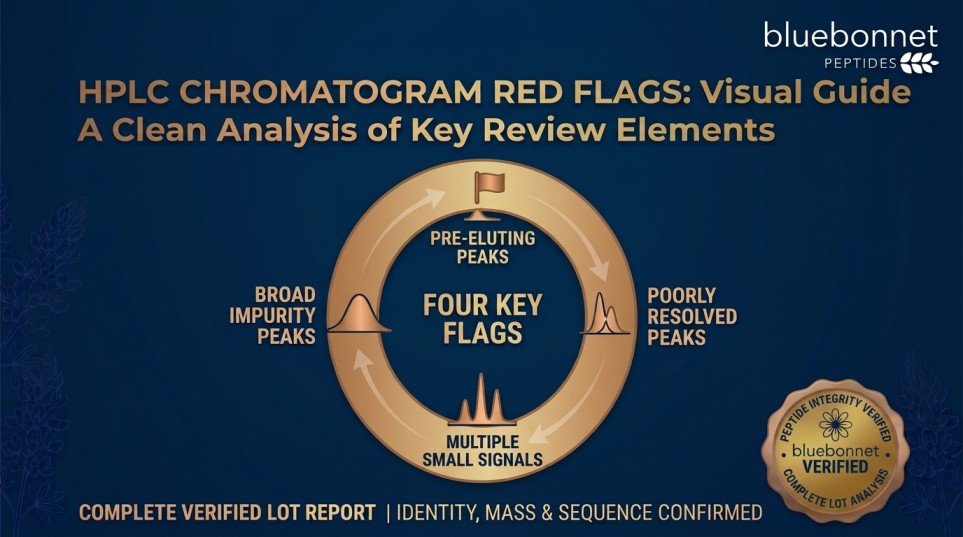
- HPLC: Oxidized forms typically elute separately from unoxidized peptide, appearing as impurity peaks.
Prevention:
- Proper storage: Minimize oxygen exposure, use inert atmosphere if necessary.
- Light protection: Store light-sensitive peptides in amber vials or wrapped in foil.
- Antioxidants: Some formulations include antioxidants to prevent oxidation.
- Reducing agents: Storage under reducing conditions prevents some oxidation.
Related Reading: Peptide Storage Best Practices
How Modifications Change Molecular Weight
Understanding molecular weight changes enables identity verification.
Calculating Expected Molecular Weight for Modified Peptides
Process:
Step 1: Calculate base sequence molecular weight
Sum amino acid molecular weights, subtract water for peptide bond formation (as described in sequence article).
Step 2: Add/subtract modifications
N-terminal modifications:
- Acetylation: +42.04 Da
- Formylation: +28.01 Da
- Biotinylation: +226.3 Da
- PEGylation: +variable (500-40,000+ Da)
- Fluorescent label: +300-700 Da typical
C-terminal modifications:
- Amidation: -0.98 Da (replaces -OH with -NH₂)
- Methyl ester: +14.03 Da
- Ethyl ester: +28.05 Da
Side chain modifications:
- Disulfide bond: -2.02 Da per bond
- Phosphorylation: +79.97 Da per phosphate
- Methylation: +14.03 Da per methyl
- Oxidation (Met): +16 Da (sulfoxide)
- Palmitoylation: +238 Da
Step 3: Sum total molecular weight
Example Calculation:
- Peptide: Ac-Gly-Leu-Asp-Lys-Ala-NH₂
- Base sequence MW (unmodified Gly-Leu-Asp-Lys-Ala): 502 Da
- N-acetylation: +42 Da
- C-amidation: -1 Da
- Total MW: 502 + 42 – 1 = 543 Da
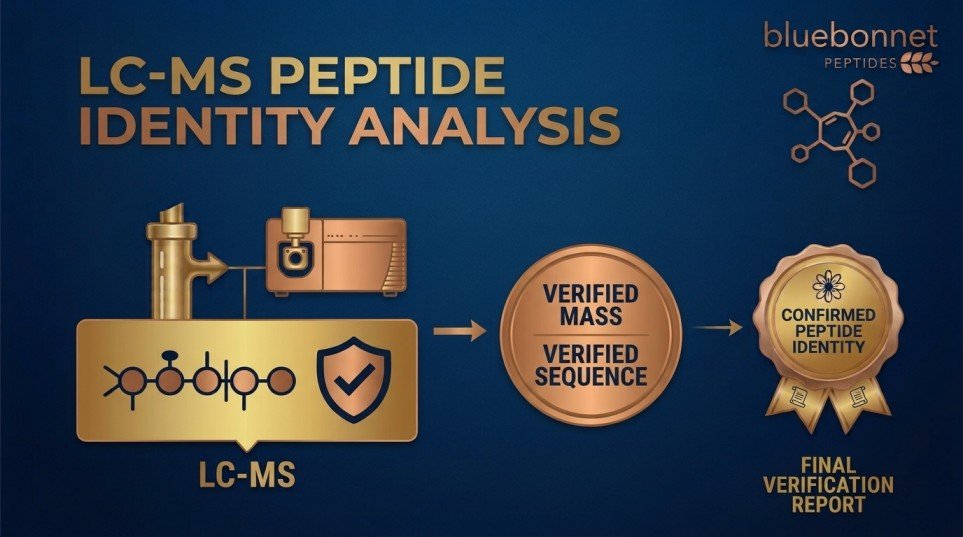
Verifying Modifications Through LC-MS
LC-MS confirms modifications by comparing observed to calculated molecular weight.
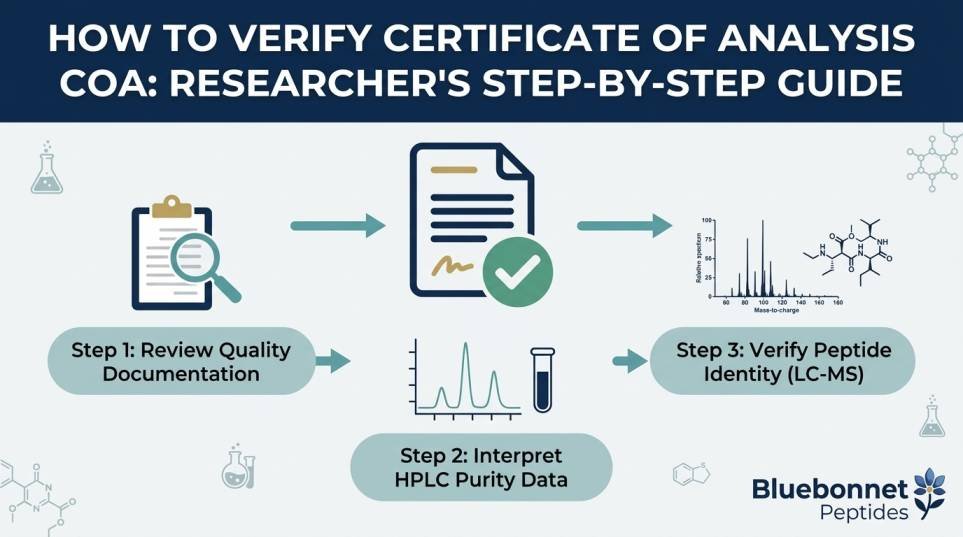
Verification process:
- Step 1: Obtain or calculate expected MW for specific modification state
- Step 2: Review LC-MS data on COA
- Step 3: Compare observed MW to expected MW
If match (within ±0.5-1 Da): ✅ Modification state confirmed
If discrepancy: ⚠️ Possible issues:
- Different modification than stated
- Unintended modifications present
- Mislabeling
- Documentation error
Example:
- Product: Claims “Ac-GHRP-6”
- Expected MW: Acetylated GHRP-6 ≈ 914 Da
- LC-MS observed MW: 872 Da
- Discrepancy: 42 Da lower than expected
- Interpretation: Material appears to be unacetylated GHRP-6 (872 Da), not acetylated version (914 Da). Product mislabeled or documentation incorrect.
- Action: Contact supplier for clarification. Material is not what was described.
Related Reading: How to Read a Certificate of Analysis

Documentation Requirements for Modified Peptides
Complete documentation clearly specifies all modifications.
What Quality Documentation Should Include
For modified peptides, COAs and product specifications must provide:
Complete structure notation:
- Full amino acid sequence
- All modifications explicitly indicated
- Modification positions specified
- Standard notation used (Ac-, -NH₂, PEG-, etc.)
Example of complete notation: Ac-His-D-Trp-Ala-Trp-D-Phe-Lys-NH₂
This clearly indicates:
- N-terminal acetylation (Ac-)
- C-terminal amidation (-NH₂)
- Presence of D-amino acids (D-Trp, D-Phe)
Molecular weight information:
- Calculated theoretical MW for stated structure (including modifications)
- Observed MW from LC-MS
- Confirmation these values match
Modification-specific details:
- Type of modification
- Attachment site(s)
- For PEGylation: PEG molecular weight or size
- For lipidation: fatty acid type and length
- For disulfides: which cysteines are bonded
Analytical data:
- HPLC purity (may show different retention than unmodified form)
- LC-MS confirming modified molecular weight
- Additional characterization if relevant (reducing vs. non-reducing conditions for disulfides, etc.)
Common Documentation Deficiencies
Inadequate modification documentation:
Missing modification notation:
Product labeled “GHRP-6” without specifying whether N-acetylated or C-amidated.
Risk: Molecular identity ambiguous; cannot verify if material matches expectations.
Vague modification description:
“Modified peptide” without specifying what modifications present.
Risk: Complete molecular structure unknown.
Molecular weight doesn’t match claimed structure:
Documentation claims “Ac-peptide-NH₂” but LC-MS shows MW inconsistent with both acetylation and amidation.
Risk: Either modifications not present as claimed, or documentation contains errors.
Incomplete PEGylation information:
States “PEGylated” without specifying PEG size or molecular weight.
Risk: Cannot calculate expected MW; cannot verify identity; impossible to compare suppliers or batches.
No modification information for cysteine-containing peptides:
Peptide contains cysteines but no information about disulfide bond status.
Risk: Unclear whether disulfides formed (and if so, which cysteines bonded).
Verifying Modification Documentation
When reviewing supplier documentation:
Check notation completeness:
- ☐ All modifications explicitly indicated in sequence notation
- ☐ Modification positions clear
- ☐ Standard nomenclature used
Verify molecular weight consistency:
- ☐ Calculate expected MW from stated structure (including all modifications)
- ☐ Compare to LC-MS observed MW on COA
- ☐ Values match within acceptable tolerance (±0.5-1 Da)
Assess modification-specific information:
- ☐ For PEGylation: PEG size specified
- ☐ For lipidation: fatty acid type/length specified
- ☐ For disulfides: bonding pattern indicated
- ☐ For phosphorylation/methylation: sites specified
Confirm analytical appropriateness:
- ☐ HPLC retention time consistent with modification (e.g., acetylated peptides more hydrophobic)
- ☐ LC-MS charge state distribution reasonable for modified structure
Question inconsistencies:
- ☐ Contact supplier if documentation unclear or inconsistent
- ☐ Request clarification of modification status
- ☐ Ask for corrected documentation if errors apparent
Suppliers providing complete modification documentation demonstrate attention to molecular-level detail essential for research-grade materials.
Bluebonnet Insight: Modified and unmodified peptides are different chemical entities requiring distinct documentation. Product names alone are insufficient — “GHRP-6” could refer to unmodified, N-acetylated, C-amidated, or fully modified (Ac- and -NH₂) versions, each with different molecular weight and structure.
Quality documentation eliminates ambiguity by:
- Using complete structural notation explicitly showing modifications
- Providing calculated molecular weight matching stated structure
- Confirming observed LC-MS molecular weight matches expected value
- Specifying modification types, sites, and characteristics
Researchers evaluating suppliers should verify:
- Modification status clearly documented for all products
- Molecular weights consistent with claimed modifications
- Analytical data supporting modification claims
- Ability to obtain detailed modification information upon request
Modification transparency is molecular identity transparency. Research reproducibility requires knowing exact structure — base sequence plus all modifications. Documentation that provides this enables verification; documentation that doesn’t creates ambiguity incompatible with rigorous research.
When procurement decisions involve modified peptides, prioritize suppliers who treat modifications as fundamental identity elements requiring comprehensive documentation, not optional details.
Modification Impact on Analytical Methods
Modifications affect how peptides behave in analytical testing.
HPLC Behavior of Modified Peptides
Modifications alter HPLC retention time:
- Acetylation (N-terminal): Increases hydrophobicity → Later elution (longer retention time) in reverse-phase HPLC
- Amidation (C-terminal): Eliminates carboxyl negative charge → Altered retention, often slightly later elution
- PEGylation: PEG highly hydrophilic → Often earlier elution, broader peaks, altered peak shape
- Lipidation: Dramatically increases hydrophobicity → Much later elution
- Fluorescent labels: Hydrophobicity varies by label → Retention time changes; UV absorbance at label wavelength
- Phosphorylation: Adds negative charges → Earlier elution in reverse-phase HPLC
- Methylation: Slightly increases hydrophobicity → Modest retention time increase
Implication: Different modification states of same peptide sequence elute at different times in HPLC. This enables separation but also means:
- Method development must account for specific modification
- Impurities (partially modified, unmodified, etc.) may appear as separate peaks
- Comparison across batches requires consistent modification state
LC-MS Behavior of Modified Peptides
Modifications affect mass spectrometry ionization and detection:
Molecular weight: Primary impact — modified peptides detected at higher (or lower) m/z corresponding to modification mass.
Charge state distribution:
- Acetylation: Blocks N-terminal amino group, typically reducing positive charge states by one.
- Amidation: Eliminates C-terminal carboxyl, reducing negative ionization efficiency in negative mode.
- PEGylation: Broad charge state distribution; PEG creates heterogeneous peak patterns.
- Phosphorylation: Adds acidic groups, enhancing negative mode ionization, complicating positive mode.
Ionization efficiency: Different modifications affect how efficiently peptides ionize.
Fragmentation patterns: In MS/MS or tandem MS, modified peptides produce characteristic fragmentation patterns helping identify modification sites.
Practical implications:
- Method parameters may need adjustment for modified peptides compared to unmodified versions (ionization voltage, fragmentor settings, etc.)
- Standard curves for quantification must use same modification state as samples
- Identity confirmation requires matching both molecular weight and expected modification
UV Absorbance Changes
Some modifications affect UV absorbance:
- Fluorescent labels: Strong absorbance at label-specific wavelengths (enables detection at those wavelengths).
- Aromatic modifications: Addition or removal of aromatic groups changes absorbance at 214-280 nm.
- PEGylation: PEG itself has minimal UV absorbance; may reduce apparent peptide concentration in UV-based assays.
Implication: Modification state affects UV-based concentration determination. Methods relying on UV absorbance must account for modification effects.
Modification Comparison Table
Summary of common modifications and their characteristics:
| Modification | Location | Molecular Weight Change | Primary Purpose | Detection Method |
|---|---|---|---|---|
| Acetylation (Ac-) | N-terminus | +42 Da | Stability, natural structure | LC-MS (+42 Da), HPLC (later retention) |
| Amidation (-NH₂) | C-terminus | -1 Da | Stability, natural structure | LC-MS (-1 Da), altered ionization |
| PEGylation | N-terminus, Lys | +500 to +40,000 Da | Circulation time, solubility | LC-MS (large MW increase), SEC-HPLC |
| Palmitoylation | N-terminus, Lys, Cys | +238 Da | Membrane association | LC-MS (+238 Da), HPLC (much later retention) |
| Biotinylation | N-terminus, Lys | +226 Da | Affinity purification, detection | LC-MS (+226 Da), streptavidin binding |
| Disulfide bond | Cys-Cys | -2 Da per bond | Structure, cyclization | LC-MS (reducing vs. non-reducing), HPLC |
| Phosphorylation | Ser, Thr, Tyr | +80 Da per phosphate | PTM mimicking, signaling | LC-MS (+80 Da), specialized enrichment |
| Methylation | Lys, Arg, N-terminus | +14 Da per methyl | Epigenetic studies | LC-MS (+14 Da multiples) |
| Oxidation (Met) | Methionine | +16 Da (sulfoxide) | Unintentional degradation | LC-MS (+16 Da), HPLC (impurity peak) |
| Fluorescent label | N-terminus, Lys | +300-700 Da typical | Visualization, tracking | LC-MS, UV-Vis at label wavelength, fluorescence |
Each modification requires specific documentation in product specifications and COAs.
Frequently Asked Questions
Q: What is a modified peptide?
A: A modified peptide contains chemical changes beyond the standard amino acid sequence. Modifications can occur at the N-terminus (beginning), C-terminus (end), or amino acid side chains. Common modifications include acetylation (Ac-), amidation (-NH₂), PEGylation, lipidation, disulfide bond formation, phosphorylation, and methylation. Modified and unmodified versions of the same amino acid sequence are molecularly distinct compounds with different molecular weights, different chemical properties, and potentially different research characteristics. Modifications may be intentional (added during synthesis for specific purposes) or unintentional (degradation products or synthesis artifacts).
Q: What is peptide acetylation?
A: Peptide acetylation is the addition of an acetyl group (CH₃CO-) to the N-terminal amino group of a peptide. This modification adds 42.04 Da to the molecular weight and is written as “Ac-” before the peptide sequence (example: Ac-Gly-Leu-Asp). Acetylation is used to:
- Mimic naturally acetylated peptides
- Increase stability by blocking aminopeptidase degradation
- Reduce aggregation tendency
- Alter chemical properties (increases hydrophobicity slightly)
Acetylated and unacetylated versions of the same peptide sequence are different compounds. LC-MS can distinguish them by the 42 Da molecular weight difference. HPLC typically shows acetylated peptides eluting slightly later (more hydrophobic) than unacetylated versions.
Q: What is peptide amidation?
A: Peptide amidation is replacement of the C-terminal carboxyl group (COOH) with an amide group (CONH₂). This modification decreases molecular weight by approximately 1 Da and is written as “-NH₂” after the peptide sequence (example: Gly-Leu-Asp-NH₂). Amidation is used to:
- Mimic naturally amidated peptides (many hormones and neuropeptides are naturally C-amidated)
- Increase stability by blocking carboxypeptidase degradation
- Alter charge state (eliminates negative charge from C-terminus)
Many biologically important peptides are naturally amidated (oxytocin, vasopressin, GHRP-6, etc.). Amidated and free acid (non-amidated) forms are different compounds with different properties. Documentation must clearly specify amidation status.
Q: What is PEGylation?
A: PEGylation is the attachment of polyethylene glycol (PEG) polymer chains to a peptide. PEG can be attached to the N-terminus, lysine side chain amino groups, cysteine thiols, or other reactive sites. PEG comes in various sizes (PEG2000 ≈ 2,000 Da, PEG5000 ≈ 5,000 Da, PEG20000 ≈ 20,000 Da, etc.), adding substantial molecular weight — from 500 Da to 40,000+ Da depending on PEG size.
PEGylation is used to:
- Increase circulation time in vivo (reduced renal clearance)
- Improve aqueous solubility
- Reduce immunogenicity
- Dramatically alter pharmacokinetic properties
PEGylated and non-PEGylated peptides are completely different compounds. PEGylation creates massive molecular weight increase easily detected by LC-MS. Documentation must specify PEG size/molecular weight. PEGylated peptides often show heterogeneous analytical profiles due to PEG polydispersity.
Q: Why do modifications change molecular weight?
A: Modifications change molecular weight because they add or remove atoms from the peptide structure. Each chemical modification contributes specific molecular mass:
- Adding an acetyl group (C₂H₃O) adds 42 Da
- Adding PEG polymer adds 500-40,000+ Da depending on size
- Adding palmitic acid adds 238 Da
- Replacing -OH with -NH₂ (amidation) changes mass by -1 Da
- Forming disulfide bond removes 2 H atoms, decreasing mass by 2 Da
The molecular weight change is stoichiometric and predictable. By calculating expected molecular weight for specific modification(s) and comparing to observed molecular weight from LC-MS, researchers can verify whether modifications claimed in documentation are actually present in the material.
Q: How can LC-MS help identify modified peptides?
A: LC-MS identifies modified peptides by measuring molecular weight and comparing to expected values:
Process:
- Calculate expected molecular weight for specific modification state (base sequence + modification mass)
- Perform LC-MS analysis
- Compare observed molecular weight to expected
- If match (within ±0.5-1 Da), modification confirmed
- If discrepancy, indicates different modification state than claimed
Example:
- Product claims: “Ac-GHRP-6” (acetylated)
- Expected MW: 914 Da (base 872 + acetyl 42)
- LC-MS shows: 872 Da
- Conclusion: NOT acetylated; product mislabeled or documentation incorrect
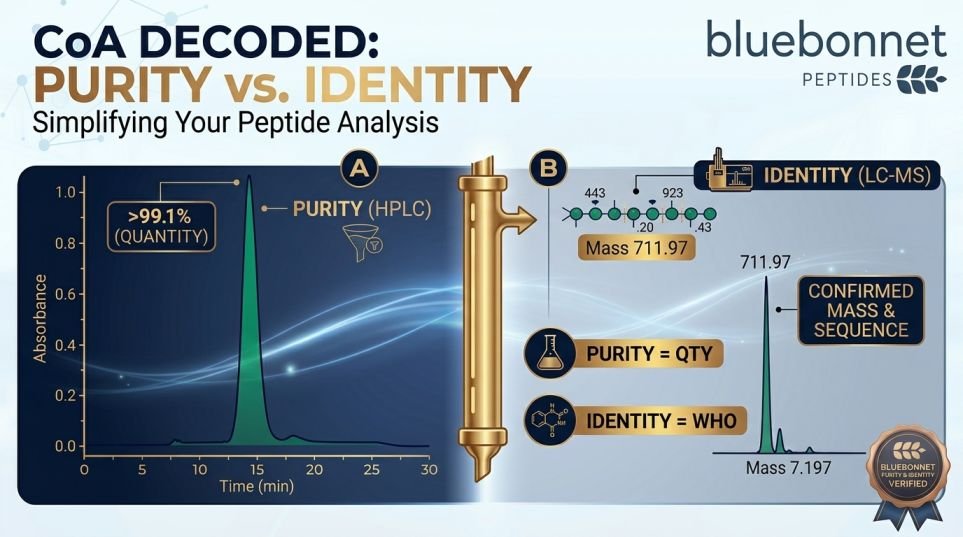
LC-MS provides definitive molecular weight-based identity confirmation. For modified peptides, LC-MS verification is essential — visual appearance, product name, or even HPLC purity don’t confirm modification presence. Molecular weight matching expected structure does.
Q: Why should peptide modifications appear on documentation?
A: Modifications must appear on documentation because they define molecular identity. Without modification information:
- Molecular identity is ambiguous: “GHRP-6” could be unmodified, N-acetylated, C-amidated, or both — each a different compound with different molecular weight and properties
- Identity verification impossible: Cannot calculate expected molecular weight without knowing modification status; cannot verify LC-MS data matches structure
- Reproducibility compromised: Other researchers cannot replicate experiments without knowing exact molecular structure used
- Supplier comparison impossible: Cannot compare quality across suppliers if modification status unclear
- Quality assessment incomplete: Cannot verify analytical data (HPLC retention, LC-MS results) makes sense for specific structure
Complete documentation includes:
- Full structural notation with modifications (Ac-, -NH₂, PEG-, etc.)
- Calculated molecular weight for stated structure
- LC-MS observed molecular weight confirming calculation
- Modification-specific details (PEG size, lipid type, disulfide connectivity, etc.)
This level of documentation enables molecular-level verification that modification claims are accurate.
Q: Are modified peptides the same as unmodified peptides?
A: No. Modified and unmodified versions of the same amino acid sequence are molecularly distinct compounds — different structures, different molecular weights, different chemical properties, and potentially different research characteristics.
Key differences:
- Molecular weight: Modifications add or remove mass (acetylation +42 Da, PEGylation +500-40,000 Da, amidation -1 Da, etc.)
- Chemical properties: Modifications alter hydrophobicity, charge, reactivity, and solution behavior
- Analytical signatures: Different HPLC retention times, LC-MS molecular weights, ionization patterns
- Stability: Modifications can increase or decrease stability depending on type
- Biological properties: May have different activity, potency, pharmacokinetics in research applications
They are not interchangeable. Research requiring specific modification must use correctly modified material. Documentation and verification must confirm modification state. Using wrong modification state (or unclear modification status) introduces uncontrolled variables compromising research validity.
Final Thoughts
Peptide modifications exist in an uncomfortable space in research procurement — simultaneously fundamental to molecular identity and frequently under-documented. A modified peptide isn’t a “version” of the unmodified peptide; it’s a different chemical compound that happens to share the same amino acid sequence. The distinction matters profoundly.
Consider the implications: Two suppliers selling peptides with identical names and similar prices, but one is acetylated and the other isn’t. The 42 Da molecular weight difference is detectable analytically, but if documentation doesn’t clearly specify modification status, researchers may not realize they’re comparing different compounds. Experimental variability follows. Reproducibility suffers. Results don’t match across laboratories, and nobody understands why — until someone finally checks the molecular weights and discovers the discrepancy.
This scenario isn’t hypothetical. It happens routinely in research settings where modification documentation is incomplete or modification verification is skipped.
Fundamental principles for modification literacy:
- Modifications define structure. Base amino acid sequence plus modifications equals complete molecular structure. Both must be documented for unambiguous identification.
- Molecular weight changes are calculable and verifiable. Each modification contributes predictable mass. Calculate expected molecular weight from complete structure (sequence + modifications), compare to LC-MS observed molecular weight. Matching confirms structure; discrepancy indicates problem.
- Notation matters. Standard nomenclature (Ac-, -NH₂, PEG-, etc.) communicates modification status clearly. Documentation lacking modification notation creates ambiguity incompatible with research-grade materials.
- Different modifications serve different purposes. Acetylation may improve stability. Amidation mimics natural structure. PEGylation alters pharmacokinetics. Modifications aren’t arbitrary — they have functional implications requiring documentation.
- Analytical methods respond to modifications. HPLC retention, LC-MS ionization, UV absorbance all affected by modification state. Interpreting analytical data requires knowing modification status.
- Verification requires completeness. Product name, purity percentage, and visual appearance don’t confirm modification state. Molecular weight verification through LC-MS comparison to calculated expected value does.
The research community’s increasing focus on reproducibility demands molecular-level precision. Publications require detailed methods. Reviewers scrutinize materials characterization. Funding agencies expect rigor. In this environment, modification ambiguity is unacceptable.
For researchers:
- Request complete structural notation including all modifications
- Verify molecular weights match expected values for stated structure
- Calculate expected MW yourself when possible — don’t blindly trust labels
- Question suppliers unable or unwilling to provide complete modification documentation
- Document exact modification status in protocols and publications
For suppliers:
- Treat modifications as fundamental identity elements requiring explicit documentation
- Use standard nomenclature clearly showing all modifications
- Provide calculated molecular weights matching complete structures
- Confirm LC-MS observed molecular weights verify modification claims
- Make modification information readily accessible, not hidden in technical documents
For institutions:
- Establish procurement standards requiring modification documentation
- Train researchers in modification verification procedures
- Implement systematic molecular weight verification protocols
- Create documentation requirements for publications ensuring modification status recorded
Modification awareness elevates peptide procurement from accepting supplier labels to verifying molecular structures. It transforms quality assessment from superficial to sophisticated. It enables the molecular-level precision rigorous research requires.
The unmodified peptide and the acetylated version are different compounds. The free acid form and the amidated form are different compounds. The native peptide and the PEGylated version are profoundly different compounds.
Documentation must reflect these distinctions. Verification must confirm them. Research integrity requires both.
Know what you’re researching — sequence plus modifications, completely specified, analytically verified, comprehensively documented.
Molecular identity matters. Modifications are molecular identity. Therefore, modifications matter.
Absolutely.
- Peptide Sequences Explained
- Understanding Peptide Purity
- How to Read a Certificate of Analysis
- Peptide Storage Best Practices
- Understanding Batch-to-Batch Consistency
- Third-Party Peptide Testing Explained
Research Use Only Disclaimer
IMPORTANT: Research Use Only (RUO)
All peptides discussed in this article, whether modified or unmodified, are Research Use Only (RUO) materials intended exclusively for laboratory research applications conducted by qualified researchers in appropriate institutional settings.
These peptides are NOT:
- Intended for human consumption or use
- Approved for medical diagnosis, treatment, cure, or prevention of any disease
- Suitable for veterinary applications
- Dietary supplements or food additives
- Cosmetic ingredients
- For self-administration or personal use
This applies to all modification states including:
- Unmodified peptides
- Acetylated peptides
- Amidated peptides
- PEGylated peptides
- Lipidated peptides
- Phosphorylated peptides
- Any other modified forms
Appropriate use includes ONLY:
- Controlled laboratory research by qualified personnel
- In vitro studies in institutional research settings
- In vivo research in approved animal model studies under IACUC oversight
- Educational purposes in academic institutions
- Method development and validation in research laboratories
- Analytical chemistry studies including modification characterization
Legal and Safety Obligations: Peptide procurement, handling, and use must comply with all applicable federal, state, and local regulations. Researchers are responsible for:
- Obtaining appropriate institutional approvals (IRB, IACUC as applicable)
- Following institutional biosafety and chemical safety protocols
- Verifying exact molecular structure including all modifications before experimental use
- Maintaining proper documentation of complete peptide structures
- Ensuring personnel are properly trained
- Preventing unauthorized access or misuse
- Proper disposal according to institutional EH&S guidelines
Modification Information: Information provided about peptide modifications is for educational purposes to help researchers understand structural characteristics and identity verification. Researchers must verify modification status through appropriate analytical documentation (LC-MS, complete structural notation) for specific research materials.
By procuring or using research peptides, you acknowledge:
- Materials are Research Use Only regardless of modification state
- You are a qualified researcher or acting under supervision of qualified personnel
- You will verify complete molecular structure including all modifications
- You will use materials only for legitimate research in appropriate institutional settings
- You understand and accept all legal and safety responsibilities
- You will not use materials for human consumption, medical treatment, or any non-research purpose
Bluebonnet Peptides supplies Research Use Only materials exclusively to qualified research institutions and personnel. We do not supply peptides for human consumption, medical use, or any non-research applications.