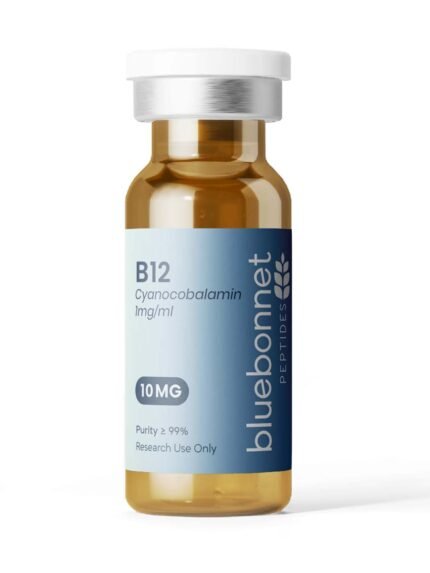
≥99% Purity
 Third-Party Tested
 COA Available
 U.S.-Based
 Research Use Only


Last updated: August 2026 | 8-minute read
When you receive a vial of research peptides, it arrives as a powder. But that powder isn’t just dried — it’s lyophilized.
The difference matters more than you might think.
Proper lyophilization peptides (freeze-drying) is what separates stable, long-lasting peptides from products that degrade before you open the vial. It’s the difference between accurate dosing and uncertainty, between reliable research results and compromised data.
This guide explains what lyophilization is, why it matters for peptide stability, and how to identify properly freeze-dried products.
What Is Lyophilization?
Lyophilization (also called freeze-drying) is a dehydration process that removes water from a substance while preserving its structure and biological activity.
The Goal: Remove moisture from peptides without damaging their chemical structure, creating a stable powder that can be stored for extended periods and reconstituted when needed.
Why Not Just Regular Drying? Standard heat-based drying methods can:
- Destroy heat-sensitive peptide bonds
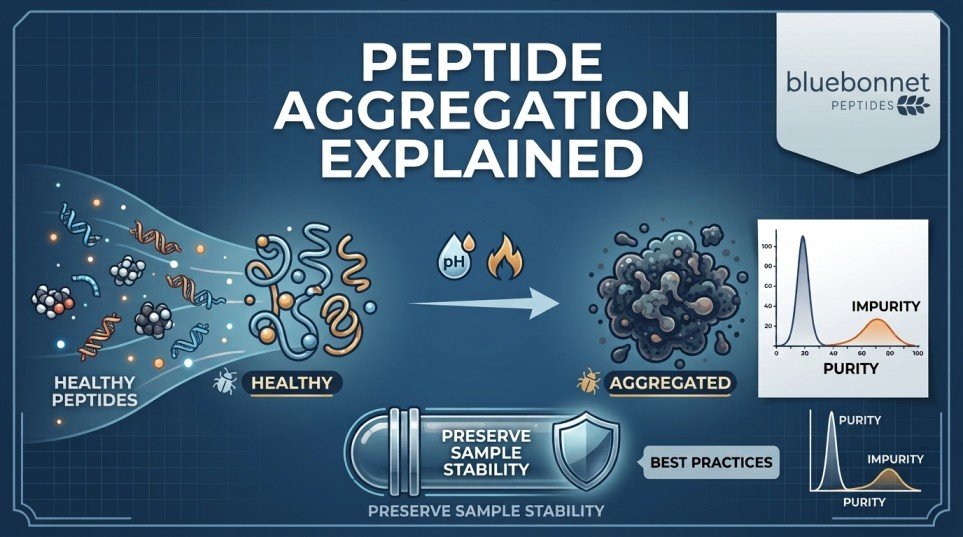
- Cause aggregation (peptides clumping together)
- Alter three-dimensional structure
- Reduce biological activity
Lyophilization avoids heat entirely, preserving the peptide’s integrity.
The Lyophilization Peptides Process: Step-by-Step
Understanding how lyophilization works helps you appreciate why it matters for quality.
Step 1: Freezing
The peptide solution is frozen at extremely low temperatures (typically -40°C to -80°C).
What happens:
- Water in the solution turns to ice
- Peptides are trapped in the ice matrix
- Structure is preserved in solid state
Why it matters: Freezing locks the peptides in place, preventing them from denaturing or aggregating during the drying process.
Step 2: Primary Drying (Sublimation)
The frozen peptide is placed under vacuum, and heat is gently applied (still below freezing).
The science:
- Ice transitions directly from solid to gas (sublimation)
- Water vapor is removed from the frozen peptide
- Peptides remain frozen and structurally intact
Why it matters: Sublimation removes about 95% of the water content without melting the ice back to liquid (which could damage the peptides).
Step 3: Secondary Drying (Desorption)
Temperature is gradually increased under continued vacuum to remove remaining bound water molecules.
The science:
- Removes residual moisture not removed during sublimation
- Brings water content down to 1-3%
- Ensures long-term stability
Why it matters: Residual moisture is what causes degradation over time. Secondary drying ensures the product is stable for months or years.
Step 4: Sealing
The lyophilized peptide is sealed under vacuum or inert gas (nitrogen) to prevent moisture reabsorption.
Why it matters: Once dried, peptides are hygroscopic (they absorb moisture from air). Proper sealing prevents rehydration before you’re ready to use the product.
Why Lyophilization Matters for Peptide Stability
The freeze-drying process isn’t just about creating a powder — it’s about creating a stable product.
Chemical Stability
Without proper lyophilization peptides:
- Peptides degrade through hydrolysis (reaction with water)
- Oxidation occurs more readily in solution
- Chemical bonds break down over time
With proper lyophilization:
- Water activity is minimized (typically less than 0.1)
- Hydrolysis reactions are virtually stopped
- Oxidation is significantly slowed
- Shelf life extended from weeks to years
Structural Integrity
Peptides are chains of amino acids with specific three-dimensional structures. Water molecules help maintain these structures, but excess water causes:
- Aggregation: Peptides clumping together
- Conformational changes: Folding into incorrect shapes
- Loss of activity: Structure determines function
Lyophilization preserves the native structure by removing water gently, preventing these destructive changes.
Dosing Accuracy
Lyophilized peptides provide consistent dosing:
In solution:
- Concentration changes as water evaporates
- Difficult to verify actual peptide content
- Degradation products affect calculations
Lyophilized powder:
- Net peptide content is stable and known
- Reconstitution with precise volume creates accurate concentration
- No evaporation concerns during storage
How to Identify Properly Lyophilized Peptides
Not all “powdered” peptides are created equal. Here’s how to assess lyophilization quality.
Visual Inspection
Good lyophilization:
- Appearance: Fluffy, cotton-like cake or uniform powder
- Color: White to off-white (for most peptides)
- Texture: Dry, not sticky or clumped
- Form: Intact cake that hasn’t collapsed
Poor lyophilization:
- Appearance: Dense, hard pellet or sticky mass
- Color: Yellowing or discoloration
- Texture: Moist, tacky, or crystallized
- Form: Collapsed cake (indicates improper freezing or drying)
The “Cake” Structure
Properly lyophilized peptides form a porous cake structure. The porous structure:

- Allows rapid reconstitution (water penetrates quickly)
- Indicates proper sublimation occurred
- Shows water was removed without collapsing the matrix
Water Content Analysis
Quality suppliers test water content using Karl Fischer titration.
| Water Content | Stability Rating |
|---|---|
| Below 3% | Excellent stability |
| 3-5% | Good stability |
| Above 5% | Compromised stability |
Where to find this: listed on the Certificate of Analysis (COA) — look for “Water Content” or “Residual Moisture.”
Storage Stability: Lyophilized vs. Reconstituted
Understanding the stability difference helps you plan your research.
| Aspect | Lyophilized (Powder) | Reconstituted (Liquid) |
|---|---|---|
| Storage Temperature | -20°C to -80°C (freezer) | 2°C to 8°C (refrigerator) |
| Stability at -80°C | 2-3+ years | N/A |
| Stability at -20°C | 1-2 years | N/A |
| Stability at 4°C | 6-12 months (not recommended long-term) | 30 days maximum |
| Main Risk | Moisture absorption | Hydrolysis, oxidation, bacterial growth |
Critical: Once reconstituted, use quickly or aliquot and refreeze (though freeze-thaw cycles degrade quality).
Shipping Considerations for Lyophilization Peptides
How peptides are shipped affects their stability before they reach your laboratory.
Temperature Requirements
Lyophilized peptides should ship:
- ✅ With cold packs or ice packs
- ✅ In insulated packaging
- ✅ With temperature monitoring (ideally)
- ✅ Via expedited shipping (minimize transit time)
Why it matters: Even lyophilized peptides can degrade if exposed to high heat (above 30°C/86°F), direct sunlight, or humidity (moisture absorption).
Packaging Standards
Proper shipping packaging:
- Insulated box: Polystyrene or similar
- Cold packs: Frozen gel packs or dry ice (for international)
- Desiccant: Silica gel packets to absorb moisture
- Light protection: Opaque or amber packaging
- Cushioning: Protects vials from physical shock
Red flags:
- Regular envelope or box (no insulation)
- No cold packs in warm weather
- No desiccant
- Clear packaging exposed to light
Receiving Inspection
When your peptides arrive:
✅ Check:
- Packaging is cold to the touch (if shipped with cold packs)
- Cold packs are still partially frozen or cool
- No condensation inside packaging (indicates temperature fluctuation)
- Vials are intact, not cracked
- Powder appears dry and fluffy (not clumped or wet)
- Lot numbers match your order
❌ If you see warm packaging, melted cold packs (in hot weather), wet vials or damp powder, or clumping or discoloration — contact the supplier immediately. The product may have degraded during shipping.
Laboratory Handling of Lyophilization Peptides
Once received, proper handling maintains stability until use.
Short-Term Storage (Before Use)
Best practice:
- Store at -20°C or -80°C immediately upon receipt
- Keep in original packaging until ready to use
- Protect from light (store in opaque container or dark drawer)
- Avoid frequent temperature changes
Avoid:
- Leaving at room temperature for extended periods
- Storing in frost-free freezers (temperature fluctuations during defrost cycles)
- Exposing to humidity (bathroom, near water sources)
Preparing for Reconstitution
Before opening:
- Allow vial to come to room temperature (still sealed) — prevents condensation when opening cold vial in warm room
- Inspect the lyophilized cake — should be intact, fluffy, uniform color
- Calculate reconstitution volume — determine desired concentration (example: 10mg vial + 1mL water = 10mg/mL)
Reconstitution Best Practices
Materials:
- Sterile water for injection (WFI) or bacteriostatic water
- Sterile syringe and needle
- Alcohol swabs
Process:
- Swab the vial septum with alcohol
- Draw reconstitution liquid into syringe
- Inject slowly down the side of the vial (not directly onto powder)
- Gently swirl (don’t shake vigorously — can cause aggregation)
- Allow to dissolve completely (may take 1-2 minutes)
- Store reconstituted solution at 2-8°C
- Use within recommended timeframe (typically 30 days)
Never:
- Shake vigorously (causes foam and aggregation)
- Use tap water or non-sterile water
- Reconstitute with hot water
- Leave reconstituted peptide at room temperature for extended periods
Common Lyophilization Peptides Issues and How to Spot Them
Not all lyophilization is equal. Here are signs of poor freeze-drying.
Issue 1: Collapsed Cake
What it looks like:
- Dense, shrunken pellet instead of fluffy cake
- Cracked or fractured appearance
- Glassy or crystalline texture
Why it happens:
- Too rapid warming during primary drying
- Insufficient freezing before drying
- Vacuum failure during process
Impact: Reduced surface area (harder to reconstitute), possible structural damage to peptides, and uneven moisture distribution.
Issue 2: High Residual Moisture
What it looks like:
- Sticky or tacky powder
- Clumping together
- Difficult to dissolve (forms gel rather than solution)
Why it happens:
- Insufficient secondary drying
- Vacuum leak during process
- Humid environment during sealing
Impact: Reduced shelf life, increased degradation rate, and potential bacterial growth.
Issue 3: Oxidation During Processing
What it looks like:
- Yellow or brown discoloration (should be white/off-white)
- May have “burnt” appearance
Why it happens:
- Exposure to oxygen during processing
- Too high temperature during secondary drying
- Improper sealing (air in vial)
Impact: Peptide oxidation, reduced biological activity, and potential toxicity from oxidation products.
Issue 4: Inadequate Sealing
What it looks like:
- Powder appears damp upon receipt
- Vial stopper not fully seated
- Vacuum obviously broken (stopper easy to push in)
Why it happens:
- Poor quality control in packaging
- Rough handling during shipping
- Age (rubber stoppers degrade over time)
Impact: Moisture absorption from air, oxidation, and rapid degradation.
Bluebonnet’s Lyophilization Peptides Standards
At Bluebonnet Peptides, lyophilization isn’t an afterthought — it’s a critical quality control step.
Our Lyophilization Process
1. Pre-Treatment
- Peptide solutions filtered for sterility
- Concentration optimized for proper cake formation
- pH adjusted for maximum stability
2. Controlled Freezing
- Rapid freezing to -40°C or below
- Uniform freezing to prevent concentration gradients
- Ice crystal size optimized for efficient sublimation
3. Primary Drying (Sublimation)
- Vacuum maintained at less than 100 mTorr
- Shelf temperature ramped gradually
- Sublimation monitored to ensure complete ice removal
4. Secondary Drying (Desorption)
- Temperature increased to 20-25°C under vacuum
- Residual moisture reduced to less than 3%
- Process verified by in-line moisture sensors
5. Quality Control Testing
- Visual inspection: Cake structure, color, uniformity
- Water content: Karl Fischer titration (less than 3% target)
- Reconstitution test: Must dissolve clear in less than 2 minutes
- Stability testing: Accelerated aging studies
6. Packaging
- Sealed under nitrogen or vacuum
- High-quality butyl rubber stoppers (low gas permeability)
- Crimp seals inspected for integrity
- Desiccant included in shipping containers
What this means for researchers:
- ✅ Long-term stability: 2+ years at -80°C, 1-2 years at -20°C
- ✅ Consistent reconstitution: Dissolves quickly and completely
- ✅ Accurate dosing: Stable net peptide content
- ✅ Reliable research: Minimal degradation, batch-to-batch consistency
We don’t cut corners on lyophilization because stability is foundational to research quality.
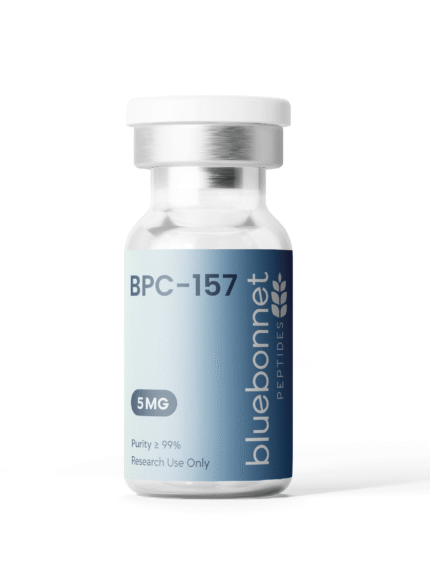
Explore our full range: BPC-157, GHK-Cu, and our complete Research Peptides range.
Frequently Asked Questions About Lyophilization Peptides
A: It depends. Minor collapse might not affect peptide integrity, but significant collapse indicates potential processing issues. Check the COA for water content and contact the supplier if you’re concerned. When in doubt, don’t use it in critical research.
A: Possible causes include improper lyophilization (dense cake), highly hydrophobic peptide sequence, aggregation during storage, or using wrong solvent (some peptides need dilute acid or organic solvent). Try gentle warming (not exceeding room temperature), sonication, or a different reconstitution buffer.
A: While possible with laboratory freeze-dryers, proper lyophilization requires controlled freezing rates, precise vacuum control, validation of water content, and sterile conditions. Improper lyophilization can damage peptides. It’s generally better to purchase from suppliers with validated processes.
A: Signs of moisture absorption include powder clumping together, difficult to dissolve (forms sticky gel), visible moisture droplets in vial, and weight gain (if you have a precision scale). Prevention: store with desiccant, keep sealed, minimize temperature fluctuations.
A: Proper lyophilization preserves potency. However, some very sensitive peptides may lose slight activity, and improper lyophilization (too hot, too long) can damage peptides. Always check supplier COAs for potency verification.
A: Short term (days to weeks): possible, but not recommended. Long term (months): no — store at -20°C or -80°C for maximum stability. Some very stable peptides might tolerate 4°C for months, but freezing is always safer.
Final Thoughts on Lyophilization Peptides
Lyophilization is invisible quality. You don’t see the process, but you see the results in long-term stability, consistent reconstitution, reliable dosing, and reproducible research outcomes.
Poor lyophilization leads to degraded products before you even open the vial. Proper lyophilization ensures the peptide you receive today is the same peptide you’ll use in your research tomorrow.
The freeze-drying process matters because your research depends on stability.
Related Reading:
- Understanding Peptide Purity: What Does 99%+ Really Mean?
- Third-Party Peptide Testing Explained
- How to Read a Certificate of Analysis
- How to Choose a Research Peptide Supplier
Research Use Only · Not for Human Consumption · Educational Purposes Only
Bluebonnet Peptides provides research-grade peptides to qualified investigators and institutions. All products are for laboratory research use only and are not intended for human consumption, veterinary use, or therapeutic applications.