Blog

Third-party tested peptides: Why Independent Testing Matters

Third-party tested peptides quality process at Bluebonnet

Why Third-Party Testing Matters for Research Peptides

Last updated: August 2026 | 7-minute read

Every research peptide supplier claims quality. But when you ask for proof, the responses diverge quickly.

Some provide batch-specific Certificates of Analysis from independent, accredited laboratories. Others send manufacturer documentation. Some offer nothing at all—just assurances that “testing was done.”

The difference between these approaches isn’t just about transparency. It’s about whether you can actually verify what’s in your vial.

This is why third-party testing matters.

What Is Independent Third-Party Testing?

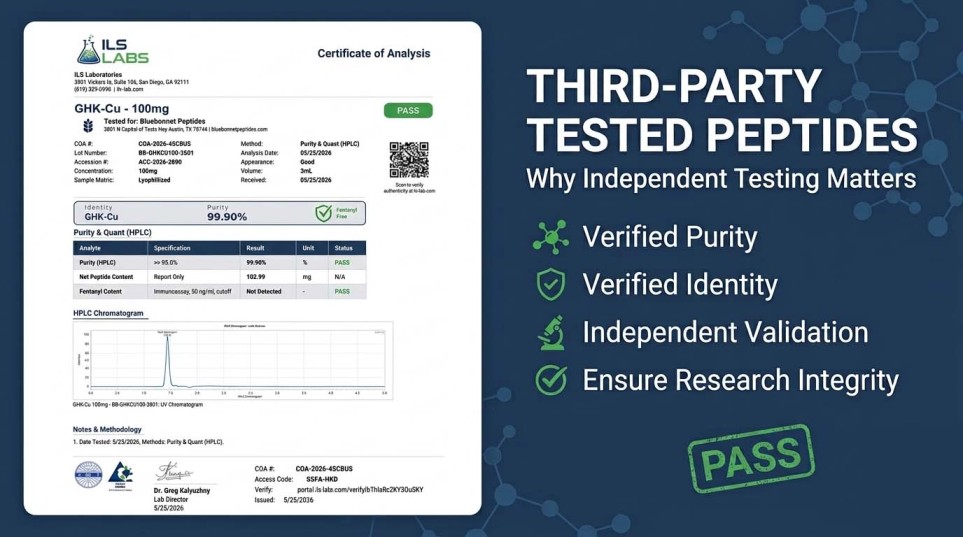
Third-party testing means an independent laboratory with no financial relationship to the manufacturer or supplier analyzes the product and issues a verification report.

The Three Parties

  1. First party: The manufacturer (makes the peptides)
  2. Second party: The supplier (sells the peptides)
  3. Third party: The independent lab (tests the peptides)

True third-party testing means the laboratory has:

  • ✅ No ownership stake in the manufacturer
  • ✅ No financial incentive for the product to pass
  • ✅ No relationship with the supplier beyond testing services
  • ✅ Accreditation from organizations like A2LA or ISO 17025

Why Independence Matters

The core principle is simple: conflict of interest undermines reliability.

Scenario 1: Manufacturer Self-Testing

A peptide manufacturer produces a batch of BPC-157. They test it using their own laboratory equipment and issue a Certificate of Analysis showing 99% purity.

The problem:

  • They have a financial incentive for the batch to pass
  • No external oversight of testing methods
  • No independent verification of results
  • They’re essentially grading their own homework

Would you trust this?

Scenario 2: Independent Third-Party Testing

The same peptide manufacturer produces a batch of BPC-157. They send a sample to an independent, accredited laboratory. The lab tests it using validated methods (HPLC, mass spectrometry) and issues a Certificate of Analysis showing 99% purity.

Why this is different:

  • ✅ The lab has no financial stake in the outcome
  • ✅ Testing methods are validated and accredited
  • ✅ Results can be verified (lab name, accreditation status)
  • ✅ Independent oversight ensures objectivity

This is verifiable quality.

What Third-Party Testing Verifies

Independent laboratory testing answers three critical questions:

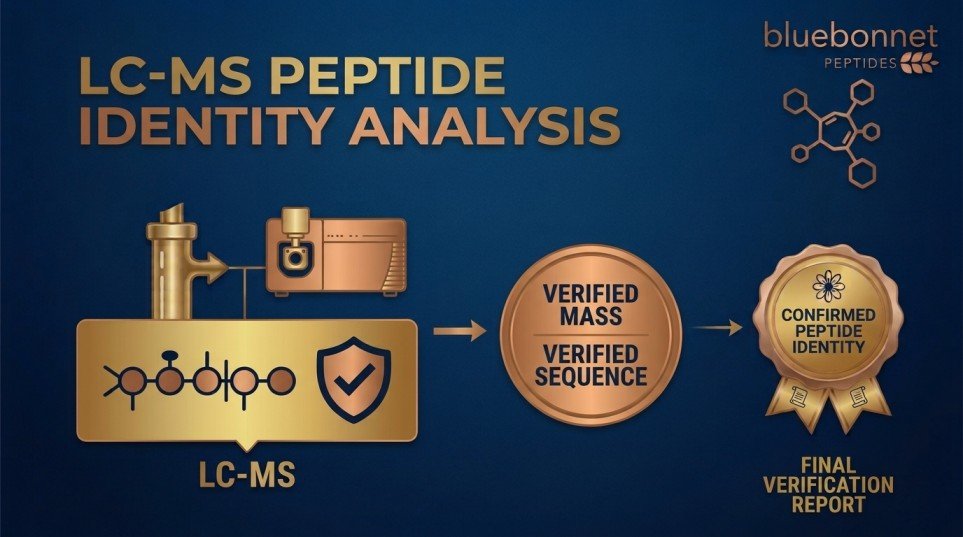
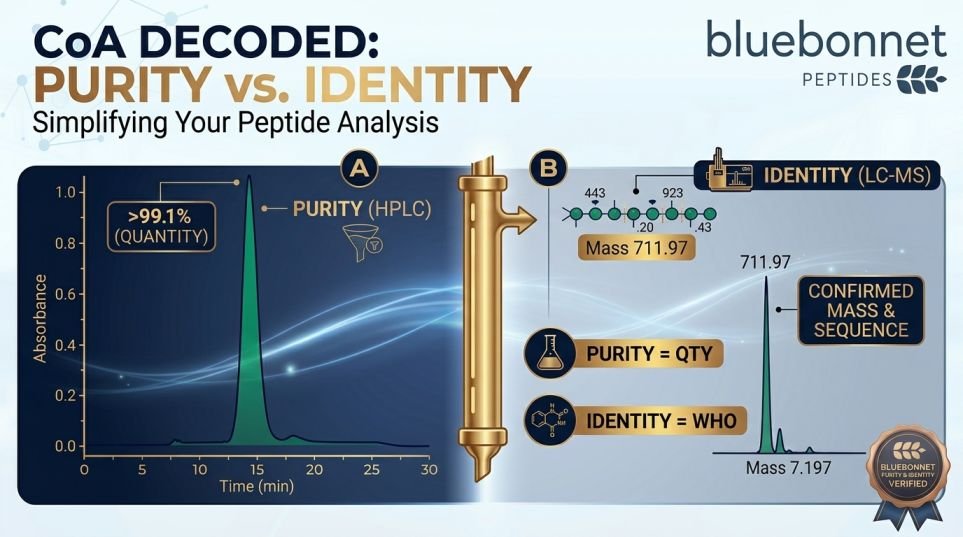
Is This the Correct Peptide?

Testing method: Mass spectrometry

What it confirms:

  • Molecular weight matches the expected peptide
  • Amino acid sequence is correct
  • You’re getting BPC-157, not a different compound

Why it matters: Without identity confirmation, you can’t be certain the vial contains what the label claims.

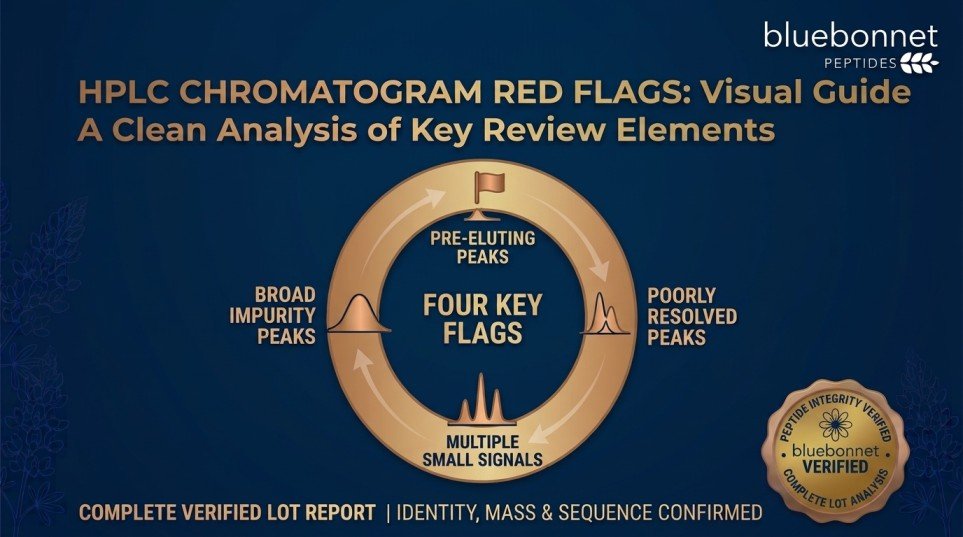
How Pure Is It?

Testing method: HPLC (High-Performance Liquid Chromatography)

What it confirms:

  • Percentage of the sample that is the target peptide
  • What impurities are present (degradation products, synthesis byproducts)
  • Whether the product meets research-grade standards (≥99%)

Why it matters: Purity directly impacts research reproducibility. Lower purity = more variables = less reliable results.

Is It Contaminated?

Testing methods: Fentanyl screening, heavy metals testing, bacterial endotoxin testing

What it confirms:

  • No fentanyl contamination (detected in some poorly sourced research chemicals)
  • Heavy metals within safe limits
  • Bacterial endotoxins below acceptable levels

Why it matters: Contamination can skew research outcomes, especially in cell culture and animal studies.

Reputable Laboratories: What to Look For

Not all testing labs are equal. Here’s what separates legitimate third-party labs from questionable ones.

✅ Accreditation

Look for:

  • A2LA (American Association for Laboratory Accreditation)
  • ISO 17025 (International standard for testing laboratories)

How to verify:

  1. Visit a2la.org/directory
  2. Search for the lab name
  3. Confirm their accreditation is active and covers peptide testing

✅ Independence

The lab should:

  • Have no ownership connection to the manufacturer
  • Have no financial relationship with the supplier (beyond testing fees)
  • Operate as an independent business entity

Red flag: Lab is owned by the same parent company as the peptide manufacturer.

✅ Verifiable Contact Information

You should be able to:

  • Find the lab’s website
  • Confirm they offer peptide testing services
  • Contact them to verify COA authenticity

Red flag: Lab name isn’t searchable online, or no website exists.

✅ Validated Testing Methods

Reputable labs use:

  • HPLC for purity analysis (gold standard for peptides)
  • Mass spectrometry for identity confirmation
  • Validated protocols with known accuracy and precision

Red flag: Testing methods aren’t specified on the COA.

Manufacturer Testing vs. Independent Verification

Here’s the difference in practice:

AspectManufacturer TestingIndependent Third-Party Testing
Who tests?Company that made the productIndependent, accredited laboratory
Conflict of interest?Yes (financial incentive to pass)No (no stake in outcome)
Verifiable?Difficult (no external oversight)Yes (lab name, accreditation, contact info)
ObjectivityLow (self-certification)High (independent verification)
TrustworthinessRequires trust in manufacturerCan be independently verified
Industry standard?Not for research-grade productsYes, for reputable suppliers

Simple rule: If you can’t verify it independently, it’s not truly third-party testing.

Batch-Specific Testing: Why It Matters

Third-party testing is only meaningful if it’s batch-specific—meaning each production batch (lot number) is tested separately.

Why Batch-to-Batch Variation Occurs

Even with consistent manufacturing processes, variables can affect quality:

  • Raw material quality fluctuations
  • Environmental conditions during synthesis
  • Storage and handling
  • Equipment calibration drift

One batch might test at 99.2% purity. The next might be 97.8%.

What Batch-Specific Testing Means

✅ Every lot number has its own COA

  • Each batch is independently tested
  • Results reflect the specific batch you receive
  • Lot number on COA matches lot number on your vial

❌ Generic or recycled COAs:

  • One COA used for multiple batches
  • No way to verify your specific batch was tested
  • Testing might be months or years old

How COAs Verify Purity and Identity

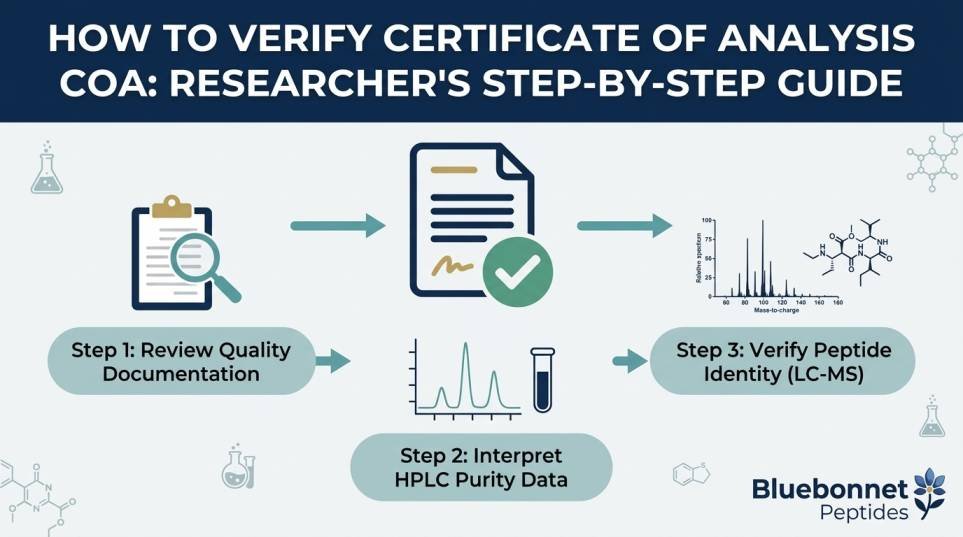
A Certificate of Analysis (COA) is the documentation that proves third-party testing occurred.

What a Legitimate COA Includes

  1. Product Information
    • Product name (e.g., BPC-157)
    • Lot/batch number
    • Quantity tested
  2. Laboratory Information
    • Lab name
    • Lab accreditation (A2LA, ISO 17025)
    • Lab contact information
    • Testing date
  3. Testing Methods
    • HPLC for purity
    • Mass spectrometry for identity
    • Contamination screening methods
  4. Results
    • Purity percentage (should be ≥99% for research-grade)
    • Molecular weight (confirms identity)
    • Contamination results (fentanyl, heavy metals, endotoxins)
  5. Visual Data
    • HPLC chromatogram (graph showing purity peaks)
    • Mass spec spectrum (confirming molecular weight)
  6. Pass/Fail Conclusion
    • Clear statement of whether the batch meets specifications
  7. Authorized Signature
    • Signed by lab personnel
    • Date of report issuance

Learn more: How to Read a Certificate of Analysis

Red Flags: When “Third-Party Testing” Isn’t Real

Some suppliers claim third-party testing but don’t actually provide it. Here’s how to spot the difference.

🚩 No Lab Name Listed

If the COA doesn’t identify the testing laboratory, you can’t verify it’s independent.

What to do: Ask the supplier for the lab name and accreditation information.

🚩 Lab Is Owned by the Manufacturer

Some manufacturers have in-house labs and call it third-party testing

What to do: Look up the lab name. If it’s owned by the manufacturer, it’s not truly independent.

🚩 Generic COAs

If the same COA is used for multiple batches, it’s not batch-specific testing.

What to do: Check if the lot number on the COA matches your vial. If there’s no lot number, request a batch-specific COA.

🚩 No Testing Methods Listed

If the COA doesn’t specify HPLC, mass spec, or other testing methods, you can’t verify how results were obtained.

What to do: Request a detailed COA that includes testing methodology.

🚩 Can’t Verify Lab Accreditation

If you can’t find the lab in A2LA or ISO directories, their accreditation may be questionable.

What to do: Search a2la.org/directory and confirm the lab is listed.

Why Researchers Should Always Request Batch-Specific Testing

If you’re conducting research, your results depend on the quality of your compounds.

The Research Integrity Question

Can you trust your results if you can’t verify your compound?

If the peptide you’re studying:

  • Is only 85% pure (not the claimed 99%)
  • Contains significant impurities
  • Is the wrong compound entirely
  • Is contaminated

…your research outcomes are compromised.

Batch-specific third-party testing removes this uncertainty.

How to Request Third-Party Testing Documentation

If a supplier doesn’t proactively provide COAs, here’s how to request them:

Email Template

Subject: Request for Batch-Specific COA - [Product Name]

Hi [Supplier Name],

I'm interested in purchasing [Product Name] for research purposes. 
Before placing an order, I'd like to review the third-party testing 
documentation.

Could you please provide:

1. Batch-specific Certificate of Analysis for the current lot
2. Independent lab name and accreditation information
3. HPLC purity results
4. Mass spectrometry identity confirmation
5. Contamination testing results (fentanyl, heavy metals, endotoxins)

Thank you for your transparency.

Best regards,
[Your Name]

What to Expect from a Reputable Supplier

✅ Good suppliers will:

  • Provide the COA within 24-48 hours
  • Include all requested information
  • Answer follow-up questions clearly
  • Have COAs publicly linked from product pages

❌ Red flags:

  • Supplier is evasive or slow to respond
  • COA is incomplete or vague
  • Supplier discourages questions about testing
  • COAs are only provided “upon request” after purchase

Bluebonnet’s Commitment to Independent Testing

At Bluebonnet Peptides, third-party testing isn’t a marketing claim—it’s how we operate.

Our Quality Process

  1. ISO-Certified Manufacturing
    • All peptides produced at facilities meeting ISO quality standards
  2. Independent Laboratory Testing
    • Every batch sent to accredited third-party labs
    • Labs have no financial relationship with our manufacturers
  3. Comprehensive Analysis
    • HPLC confirms ≥99% purity
    • Mass spectrometry confirms molecular identity
    • Fentanyl screening confirms no contamination
    • Heavy metals testing confirms safety
    • Bacterial endotoxin testing confirms sterility
  4. Batch-Specific Documentation
    • Each lot number receives its own COA
    • Testing date matches production timeline
    • Lot numbers on COAs match vial labels
  5. Public Transparency
    • All COAs published in our COA Library
    • Directly linked from product pages
    • No “request required”—documentation is proactively available
  6. Verifiable Labs
    • Lab names, accreditation, and contact information provided
    • Researchers can independently verify COA authenticity
  7. Ongoing Quality Assurance
    • Regular audits of testing protocols
    • Continuous improvement of quality standards

The Bluebonnet Difference

We don’t ask researchers to trust us. We provide the data so they can verify independently.

Our Promise

  • ✅ Every batch is third-party tested before sale
  • ✅ COAs are batch-specific and publicly accessible
  • ✅ Lab accreditation is verifiable
  • ✅ Testing methods are clearly documented
  • ✅ Results are transparent and reproducible

This is what research-grade quality looks like.

View All Third-Party Testing Results →

Why This Matters for Your Research

In scientific research, reproducibility is everything.

If you can’t verify:

  • What compound you’re studying
  • How pure it is
  • Whether it’s contaminated

…you can’t trust your results.

Third-party testing provides the verification that removes uncertainty.

Same peptide name. Very different verification standards. It’s worth knowing the difference.

Frequently Asked Questions

Q: How much does third-party testing cost suppliers?

A: Independent third-party testing typically costs $200-$500+ per batch, depending on the scope of analysis (purity only vs. purity + identity + contamination screening).

This is why some suppliers skip it—it’s expensive. But it’s the only way to verify quality objectively.

Q: Can I request testing from my own chosen laboratory?

A: Some suppliers may accommodate this, but it’s uncommon. Most reputable suppliers already work with established, accredited labs and won’t change their testing protocols for individual customers.

Alternative: You can independently test a sample yourself using a third-party lab. This provides additional verification if you have concerns.

Q: How often should batches be tested?

A: Every batch should be tested. Batch-to-batch variation is common in peptide manufacturing. Testing one batch doesn’t guarantee the next batch meets the same standards.

Q: What if a batch fails third-party testing?

A: Reputable suppliers discard batches that fail quality testing. They don’t sell substandard products.

Red flag: If a supplier sells peptides with purity below 95%, they may not be discarding failed batches.

Q: Can COAs be faked?

A: Yes, which is why verifiable lab information is critical. Always:

  • Look up the lab name online
  • Confirm their accreditation in A2LA directories
  • Verify lot numbers match your product
  • Contact the lab directly if you have concerns

Final Thoughts

Third-party testing is the difference between verifiable quality and blind trust.

In research, you can’t afford to wonder whether the compound you’re studying matches its label. Independent verification removes that question.

At Bluebonnet Peptides, we believe transparency isn’t optional—it’s foundational.

Verify the data. Trust the results.

Related Reading:

Ready to Review Our Third-Party Testing Results?

Every Bluebonnet Peptides batch is independently tested by accredited third-party laboratories.

View batch-specific Certificates of Analysis, HPLC chromatograms, mass spectrometry results, and contamination screening reports.

View COA Library →

Research Use Only · Not for Human Consumption · Educational Purposes Only

Bluebonnet Peptides provides research-grade peptides to qualified investigators and institutions. All products are for laboratory research use only and are not intended for human consumption, veterinary use, or therapeutic applications.

Leave a Reply

Your email address will not be published. Required fields are marked *