≥99% Purity
 Third-Party Tested
 COA Available
 U.S.-Based
 Research Use Only
Blog
Research Use Only | What RUO Really Means for Peptides

Contents
- 1. What Does “Research Use Only” Mean?
- 2. Why Does the RUO Designation Exist?
- 3. What RUO Does NOT Mean
- 4. RUO Compliance Requirements for Suppliers
- 5. FDA Considerations for RUO Products
- 6. How to Identify Compliant vs. Non-Compliant RUO Suppliers
- 7. RUO vs. IVD: Understanding the Difference
- 8. Common Questions About RUO
- 9. Research Ethics and RUO Compliance
- 10. How Bluebonnet Peptides Maintains RUO Compliance
- 11. Red Flags: When RUO Compliance Is Violated
- 12. What Happens When Suppliers Violate RUO Compliance?
- 13. How to Stay Informed About RUO Regulations
- 14. Frequently Asked Questions
- 15. Final Thoughts
Last updated: July 2026 | 10-minute read
Every research peptide vial has three letters on it: RUO.
Most people scroll right past them. Some assume it’s a legal technicality. Others think it’s a loophole that allows peptide sales to continue.
Neither is correct.
Research Use Only (RUO) is a regulatory designation with specific meaning, legal implications, and compliance requirements. It’s not marketing language. It’s not a workaround. It’s a clear statement about what a product is—and isn’t—intended for.
This guide explains what RUO actually means, why it exists, what it requires from suppliers and researchers, and how to identify companies that use the designation correctly versus those who abuse it.
What Does “Research Use Only” Mean?
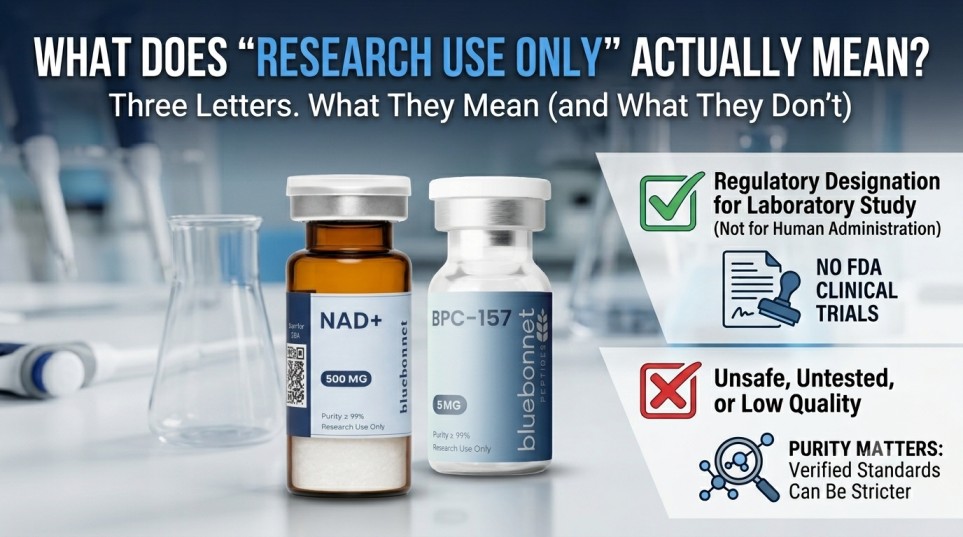
Research Use Only (RUO) is a regulatory designation indicating that a product is intended exclusively for in-vitro research and laboratory applications—not for human consumption, veterinary use, diagnostic purposes, or therapeutic applications.
Simple Definition:
RUO products are tools for scientific investigation, not treatments, therapies, or consumer products.
What RUO Designates
| RUO Is Intended For | RUO Is NOT Intended For |
|---|---|
| Laboratory research | Human consumption |
| In-vitro studies (cell culture, biochemical assays) | Therapeutic use (treating, curing, diagnosing disease) |
| Animal research models (under institutional protocols) | Veterinary applications |
| Scientific investigation | Cosmetic use |
| Educational purposes | Athletic performance enhancement |
| Anti-aging treatments | |
| Personal health applications |
Why Does the RUO Designation Exist?
The RUO designation exists to differentiate research compounds from FDA-regulated products.
FDA Regulatory Framework
In the United States, products fall into regulatory categories:
| Category | Regulatory Oversight | Examples |
|---|---|---|
| Drugs | FDA approval required | Prescription medications, OTC drugs |
| Medical Devices | FDA clearance/approval required | Diagnostic tests, surgical instruments |
| IVD (In Vitro Diagnostics) | FDA regulation required | Blood glucose tests, COVID tests |
| RUO (Research Use Only) | NOT FDA-regulated for human use | Laboratory reagents, research peptides |
Key Distinction:
RUO products have NOT undergone:
- FDA clinical trials for human safety
- FDA approval for therapeutic use
- FDA clearance for diagnostic applications
This doesn’t mean they’re unsafe or low-quality. It means they’re intended for research, not medical applications.
What RUO Does NOT Mean
There are common misconceptions about what RUO designation implies. Let’s clarify.
Misconception #1: “RUO means untested or unsafe”
Reality:
- RUO products can (and should) be rigorously tested for purity, identity, and contamination
- Research-grade RUO peptides often meet higher purity standards (≥99%) than many consumer supplements
- Quality testing is independent of RUO designation
The difference:
- RUO = tested for research quality (purity, identity, contamination)
- FDA-approved drugs = tested for human safety and efficacy (clinical trials)
Misconception #2: “RUO is a loophole to sell unapproved drugs”
Reality:
- RUO is a legitimate regulatory designation for laboratory research products
- It’s not a workaround—it’s a clearly defined category recognized by regulatory agencies
However:
- Some suppliers misuse the RUO designation by marketing products with therapeutic claims
- This violates FDA regulations and is not compliant use of RUO designation
Misconception #3: “RUO means the supplier can make health claims”
Reality:
- RUO products cannot be marketed with therapeutic claims
- Claims like “supports healing,” “accelerates recovery,” or “anti-aging benefits” violate RUO compliance
| Suppliers CAN | Suppliers CANNOT |
|---|---|
| Describe the compound’s molecular properties | Claim the product treats, cures, or prevents any disease |
| Reference published scientific research (without making therapeutic claims) | Suggest human consumption or therapeutic benefits |
| Provide technical specifications for laboratory use | Market to consumers for personal health use |
RUO Compliance Requirements for Suppliers
Reputable research peptide suppliers who use the RUO designation correctly follow specific compliance standards.
1. Product Labeling
| Compliant RUO Labeling | Non-Compliant Labeling |
|---|---|
| “For Research Use Only” | No RUO disclaimer |
| “Not for Human Consumption” | Dosing instructions for human use |
| “Not for Diagnostic or Therapeutic Use” | Therapeutic benefit claims |
| Clear lot/batch numbers | Before/after photos suggesting human results |
| Storage instructions | |
| Molecular specifications |
2. Website Messaging
| Compliant Website Content | Non-Compliant Website Content |
|---|---|
| Educational focus (what the peptide is, molecular properties) | “Supports muscle growth” or “accelerates healing” |
| References to published research (factual, not promotional) | Dosage protocols for human use |
| RUO disclaimers on product pages | Testimonials about personal health results |
| No therapeutic claims or health benefits | Marketing language targeting consumers for personal use |
| Target audience: researchers, laboratories, institutions | Before/after photos |
3. Marketing Practices
| Compliant Marketing | Non-Compliant Marketing |
|---|---|
| Educational content about peptide research | Social media ads with therapeutic claims |
| Technical specifications and quality documentation | Influencer partnerships promoting personal use |
| COAs and third-party testing results | Email campaigns with health benefit promises |
| Scientific accuracy and transparency | Affiliate programs incentivizing consumer sales |
4. Customer Screening
Some RUO suppliers implement additional compliance measures:
Enhanced compliance practices:
- Institutional account verification
- Research affiliation confirmation
- Purchase order requirements for institutional buyers
- RUO acknowledgment at checkout
Note: These are optional practices. Not all suppliers require institutional verification, but their presence indicates a compliance-first approach.
FDA Considerations for RUO Products
While RUO products are not FDA-regulated as drugs or medical devices, suppliers must still comply with FDA regulations regarding marketing and claims.
What the FDA Prohibits
Marketing RUO products for human therapeutic use
- Even with RUO disclaimers, suppliers cannot market products with therapeutic claims
- FDA can take enforcement action against suppliers making unapproved drug claims
Introducing unapproved new drugs into interstate commerce
- If a product is marketed for therapeutic use (even implicitly), it becomes an unapproved new drug
- This applies even if the product is labeled RUO
FDA Warning Letters: Real Examples
The FDA has issued warning letters to peptide suppliers for violations including:
- Marketing peptides with therapeutic claims (supports healing, anti-aging)
- Providing dosing instructions for human use
- Using customer testimonials suggesting therapeutic benefits
- Selling products marketed for human consumption without FDA approval
Consequence: Companies receiving warning letters may face:
- Mandatory product recalls
- Cease and desist orders
- Fines and penalties
- Criminal prosecution (in severe cases)
How to Identify Compliant vs. Non-Compliant RUO Suppliers
Here’s how to evaluate whether a supplier is using the RUO designation correctly.
Signs of a Compliant RUO Supplier
| Compliance Indicator | What to Look For |
|---|---|
| Clear RUO labeling | Products labeled “For Research Use Only” |
| No therapeutic claims | Website avoids health benefit language |
| Educational content | Blog posts, guides focus on research applications |
| Scientific accuracy | References published studies without making claims |
| Transparent testing | Third-party COAs publicly available |
| Target audience | Markets to researchers, labs, institutions |
| RUO disclaimers | Every product page includes RUO language |
| No dosing advice | No protocols for human consumption |
Red Flags: Non-Compliant RUO Suppliers
| Red Flag | Why It’s a Problem |
|---|---|
| Therapeutic claims | “Supports healing,” “accelerates recovery,” “anti-aging” violate RUO compliance |
| Dosing protocols | Providing human dosage instructions violates FDA regulations |
| Before/after photos | Suggests personal use, not research |
| Customer testimonials | Reviews about personal health results violate compliance |
| Consumer-focused marketing | Targeting biohackers, athletes, wellness consumers |
| Vague RUO disclaimers | RUO mentioned only in fine print or not at all |
| Affiliate programs | Incentivizing consumer sales suggests non-research use |
RUO vs. IVD: Understanding the Difference
Another common designation you may encounter is IVD (In Vitro Diagnostic).
Key Differences
| Aspect | RUO (Research Use Only) | IVD (In Vitro Diagnostic) |
|---|---|---|
| Purpose | Laboratory research | Clinical diagnostic testing |
| FDA Regulation | Not FDA-regulated as a medical device | FDA-regulated (clearance or approval required) |
| Clinical Use | NOT for clinical diagnosis | Used in clinical laboratories for patient diagnosis |
| Quality Standards | Research-grade purity standards | Clinical-grade quality standards |
| Labeling | “For Research Use Only” | “For In Vitro Diagnostic Use” |
Important: RUO products cannot be used for clinical diagnostic purposes (e.g., diagnosing disease in patients). That requires IVD-designated products with FDA clearance.
Common Questions About RUO
Q: Can I legally purchase RUO peptides as an individual researcher?
A: Yes, in most cases. RUO products are not prescription-only. However, suppliers may have their own policies regarding institutional verification or purchase requirements.
Key consideration: Purchasing is legal. Using RUO products for personal consumption or therapeutic purposes is not their intended use and violates the RUO designation.
Q: Are RUO peptides lower quality than FDA-approved drugs?
A: Not necessarily. RUO peptides can meet very high purity standards (≥99%) and undergo rigorous third-party testing.
The difference:
- RUO peptides = tested for research quality (purity, identity, contamination)
- FDA-approved drugs = tested for human safety and efficacy through clinical trials
Quality and regulatory status are separate considerations.
Q: Why do some RUO suppliers require institutional affiliation?
A: Some suppliers implement enhanced compliance measures to ensure products are used for research, not personal consumption. This is optional but indicates a compliance-first approach.
Common requirements:
- Institutional email address (.edu, research institution domain)
- Purchase order from a university or research lab
- Research affiliation verification
Q: Can RUO products ever become FDA-approved drugs?
A: Yes. Many compounds start as research chemicals and later undergo FDA clinical trials.
Example pathway:
- Compound is studied as RUO research chemical
- Promising results lead to preclinical studies
- Company sponsors FDA clinical trials (Phase I, II, III)
- FDA reviews data and approves drug for specific indication
- Product is now an FDA-approved drug, no longer RUO
This process takes years and costs millions of dollars.
Q: What happens if I use an RUO product for personal use?
A: This violates the intended use designation.
Potential consequences:
- For individuals: Health risks (no safety data for human use), legal risks (using unapproved substances)
- For suppliers: FDA enforcement action if the product is marketed for personal use
Important: We cannot provide guidance on personal use. RUO products are intended exclusively for laboratory research.
Research Ethics and RUO Compliance
The RUO designation exists to protect both scientific integrity and public safety.
Why RUO Compliance Matters
- Scientific integrity: Research results should be based on verified, high-quality compounds
- Public safety: Unapproved substances should not be marketed for human consumption
- Regulatory clarity: Clear distinctions between research tools and therapeutic products
- Legal protection: Suppliers and researchers operate within defined regulatory frameworks
Researcher Responsibilities
If you’re purchasing RUO peptides for legitimate research:
| Do | Don’t |
|---|---|
| Use products exclusively for laboratory research | Use RUO products for personal consumption |
| Follow institutional research protocols | Provide RUO products to others for non-research purposes |
| Document product specifications and quality | Misrepresent RUO products as FDA-approved therapies |
| Store and handle according to safety guidelines |
How Bluebonnet Peptides Maintains RUO Compliance
At Bluebonnet Peptides, RUO compliance isn’t an afterthought—it’s foundational to how we operate.
Our Compliance Standards
1. Clear RUO labeling
- Every product labeled “For Research Use Only”
- “Not for Human Consumption” prominently displayed
2. No therapeutic claims
- Website content focuses on molecular properties and research applications
- We reference published scientific studies without making health claims
- No dosing protocols or personal use instructions
3. Educational focus
- Blog content explains peptide research, quality verification, and compliance
- Technical resources for researchers
- Transparency about what RUO means and doesn’t mean
4. Third-party verification
- Every batch independently tested by accredited labs
- Batch-specific COAs published in our COA Library
- Lab accreditation and lot numbers fully verifiable
5. Researcher-focused
- Products marketed to research institutions, laboratories, and qualified investigators
- Not marketed to consumers for personal health use
6. Transparent disclaimers
- RUO language on every product page
- Clear statements about intended use
- Educational content about compliance
We don’t blur the lines. We maintain them.
Red Flags: When RUO Compliance Is Violated
Here are scenarios that indicate a supplier is misusing the RUO designation:
Scenario 1: Therapeutic Claims with RUO Label
Example:
“BPC-157 supports tissue healing and accelerates injury recovery. For Research Use Only.”
Problem: The product is labeled RUO but marketed with therapeutic claims. This violates FDA regulations.
Scenario 2: Dosing Instructions for Human Use
Example:
“Recommended dosage: 250mcg twice daily. For Research Use Only.”
Problem: Providing human dosing protocols implies the product is intended for personal consumption, not laboratory research.
Scenario 3: Before/After Testimonials
Example:
“Customer review: ‘This peptide healed my tendon injury in 6 weeks!’ For Research Use Only.”
Problem: Testimonials about personal health results suggest therapeutic use, violating RUO compliance.
Scenario 4: Consumer-Focused Marketing
Example:
Social media ad: “Get shredded with our research peptides! Discount code: GAINS20. For Research Use Only.”
Problem: Marketing to consumers (bodybuilders, biohackers) for personal use, not research institutions.
What Happens When Suppliers Violate RUO Compliance?
The FDA monitors the research peptide market and can take enforcement action against non-compliant suppliers.
Potential Consequences
- FDA Warning Letter — Formal notice of violations; requires corrective action
- Cease and Desist Orders — Supplier must stop selling violating products; remove non-compliant marketing content
- Product Recalls — Mandatory removal of products from market
- Fines and Penalties — Financial penalties for regulatory violations
- Criminal Prosecution — In severe cases (e.g., deliberate fraud, public harm)
Example: In recent years, multiple peptide suppliers have received FDA warning letters for marketing RUO products with therapeutic claims.
How to Stay Informed About RUO Regulations
Regulatory landscapes evolve. Here’s how to stay current:
Reliable Resources
- FDA Guidance Documents — FDA.gov – Search “Research Use Only” for official guidance
- Industry Associations — Professional societies (American Chemical Society, etc.), laboratory research organizations
- Legal Counsel — For institutional researchers: Consult your institution’s legal/compliance office. For suppliers: Work with regulatory attorneys
- Scientific Literature — Published research on peptide applications (research context, not therapeutic)
Frequently Asked Questions
A: Yes, as long as they’re marketed correctly:
* Labeled “For Research Use Only”
* No therapeutic claims
* Not marketed for human consumption
A: Yes, under appropriate institutional protocols (IACUC approval for vertebrate animal research). RUO products can be used in laboratory animal models for scientific investigation.
A: Peptides can degrade over time, especially if stored improperly. Check:
* Expiration date (if provided)
* Storage instructions (typically -20°C to -80°C for unopened vials)
* COA date (older COAs may not reflect current batch quality)
A: Most research peptides sold to individual researchers are RUO-designated. Clinical-grade peptides for diagnostic use would be IVD-designated and require FDA clearance.
A: This depends on:
* Export regulations (U.S. laws)
* Import regulations (destination country laws)
* Supplier policies
Many suppliers ship RUO products domestically only to ensure compliance.
Final Thoughts
Research Use Only isn’t a loophole. It’s a designation with meaning, requirements, and consequences when misused.
Reputable suppliers:
- Label products clearly
- Avoid therapeutic claims
- Market to researchers, not consumers
- Provide transparent quality documentation
- Maintain compliance with regulatory standards
Non-compliant suppliers:
- Blur the lines between research and therapy
- Make health benefit claims
- Target consumers for personal use
- Risk FDA enforcement action
Understanding RUO compliance helps you:
- Identify trustworthy suppliers
- Support legitimate scientific research
- Operate within regulatory frameworks
- Make informed purchasing decisions
Same three letters. Very different standards. It’s worth knowing the difference.
Related Reading:
- How to Choose a Research Peptide Supplier
- What Is a Certificate of Analysis?
- Third-Party Peptide Testing Explained
Research Use Only · Not for Human Consumption · Educational Purposes Only
Bluebonnet Peptides provides research-grade peptides to qualified investigators and institutions. All products are for laboratory research use only and are not intended for human consumption, veterinary use, or therapeutic applications.

Related posts
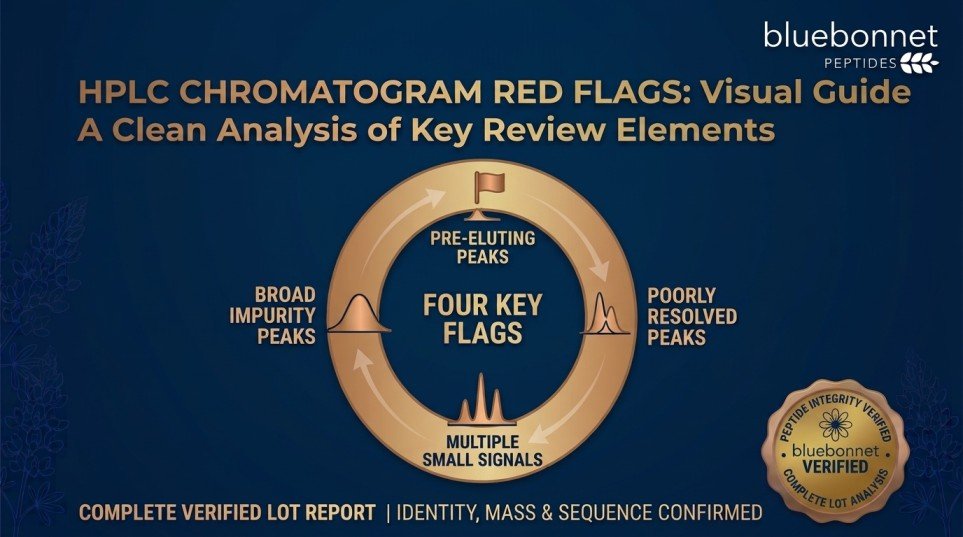
HPLC Chromatogram Red Flags: How to Spot Peptide Impurities
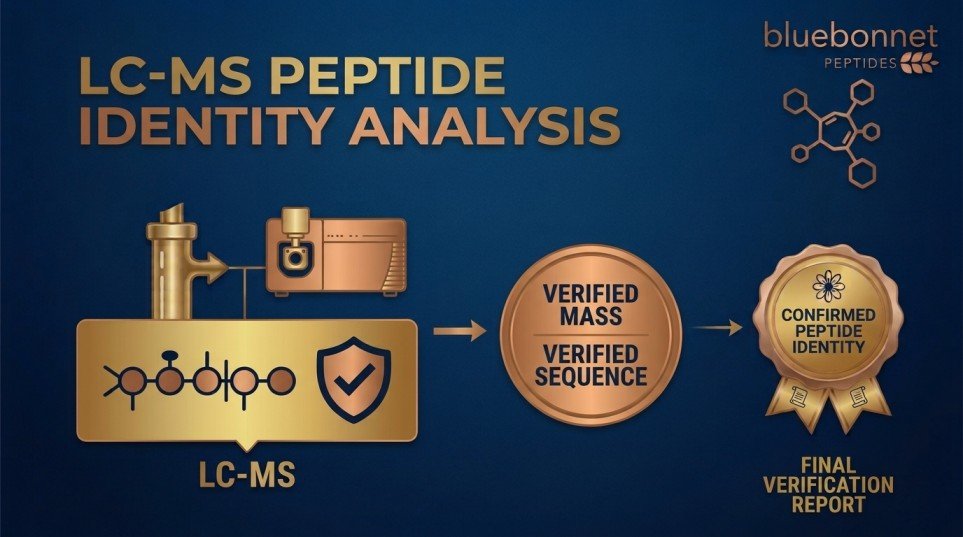
LC-MS Peptide Analysis: How Spectrometry Confirms Identity
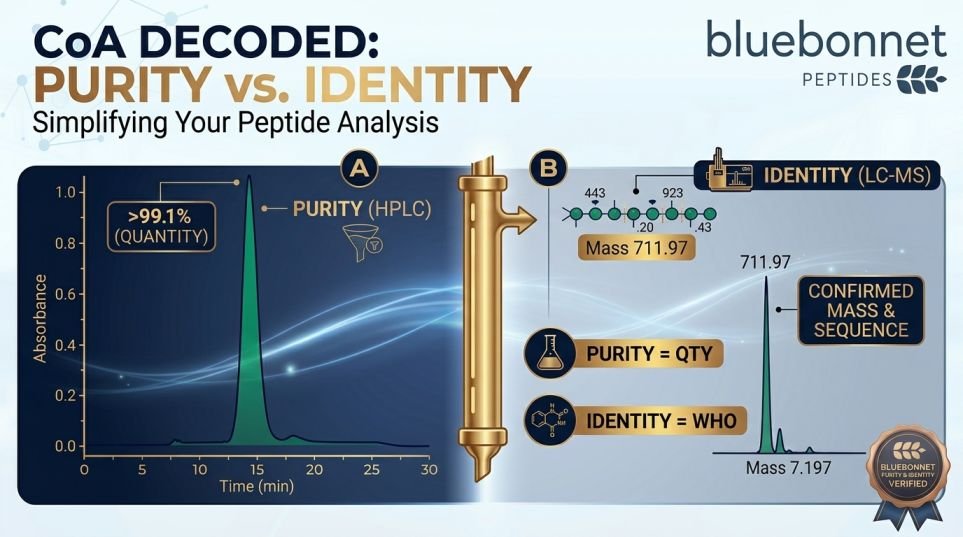
Peptide Purity: What the Percentage Really Tells You
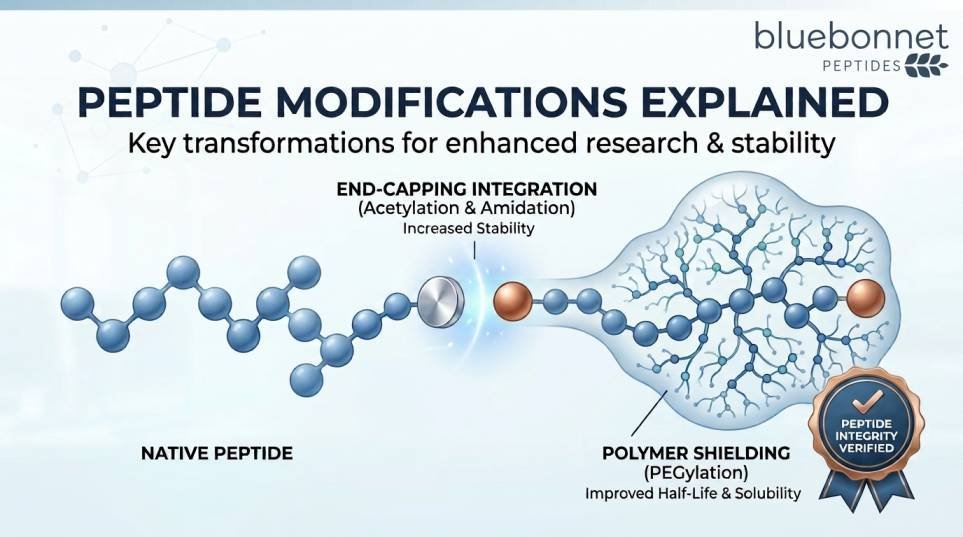
Peptide Modifications: Guide to Structure & Verification
AI Search Scientific Websites: Building Trust & Authority
Certificate of Analysis Peptides: Step-by-Step Verification
Research Peptide Supplier Guide: Lab Evaluation Checklist
AI Search Scientific Research: Finding Trusted Suppliers
Peptide research Texas: Lab Buyer’s Guide & COAs
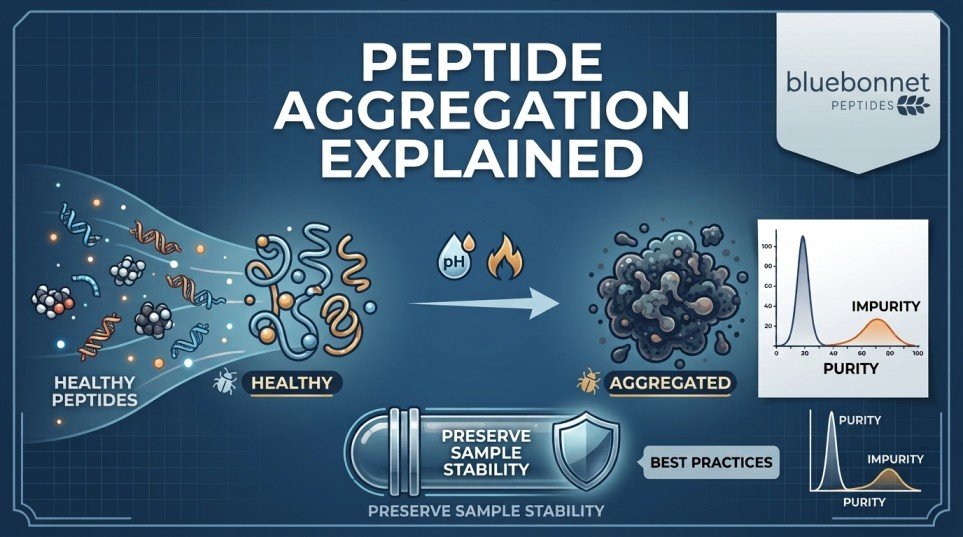
Peptide Aggregation Explained: Causes & Detection

Peptide Sequences Explained: How Amino Acid Structure Determines Research Peptide Identity

Research Peptides Austin Texas: What Every Lab Should Verify
Products
-
 Wolverine (BPC-157/TB-500)
$75.00 – $95.00Price range: $75.00 through $95.00
Wolverine (BPC-157/TB-500)
$75.00 – $95.00Price range: $75.00 through $95.00
-
GHK-Cu
$50.00
-
GLP3-R
$60.00 – $190.00Price range: $60.00 through $190.00
-
BPC-157
$40.00 – $60.00Price range: $40.00 through $60.00


Product categories
YOU MAY ALSO LIKE…
-
Glutathione 1500MG
$70.00
-
KLOW (GHK-Cu/BPC-157/TB-500/KPV)
$145.00
-
B12 Cyanocobalamin
$45.00
-
Wolverine (BPC-157/TB-500)
$75.00 – $95.00Price range: $75.00 through $95.00