 ≥99% Purity
 Third-Party Tested
 COA Available
 U.S.-Based
 Research Use Only
Research Blends
Bluebonnet Peptides’ Research Blends category brings together laboratory research materials containing two or more specified peptide components. Each blend has its own composition, total stated amount, and product documentation.


What Is a Research Peptide Blend
A research peptide blend combines two or more specified peptide components within one prepared laboratory material. Each product page lists the components, total amount, and component breakdown. Grouping components in one blend does not make the material interchangeable with the individual components or with another blend containing some of the same peptides. Researchers should evaluate the complete formulation represented by the specific product and its documentation.
Why Blend Composition Matters
Two blends may include an overlapping component while differing in the number of components, their relative amounts, or the total amount stated for the vial. These differences can affect how a material is identified, documented, and incorporated into an experimental design.
When reviewing a blend, researchers should distinguish among:
- The total stated amount for the complete blend
- The amount attributed to each listed component
- The relative proportion of components in the formulation
- The product name, SKU, and available lot or batch information
- The analytical methods and results reported for that specific material
A total amount should not automatically be treated as the amount of each component. If the component breakdown is unclear or inconsistent, confirm the specification before relying on it for research planning.
Research Blends Available from Bluebonnet
KLOW
KLOW is listed as a four-component blend containing GHK-Cu, BPC-157, TB-500, and KPV. The current product page identifies an 80 mg total formulation with a component-level breakdown. Review the individual product page for current specifications and available documentation.
Wolverine
Wolverine is listed as a two-component blend containing BPC-157 and TB-500. The current product page offers more than one total-amount option, so researchers should confirm the selected variant and its component breakdown before reviewing the associated documentation.
GLOW
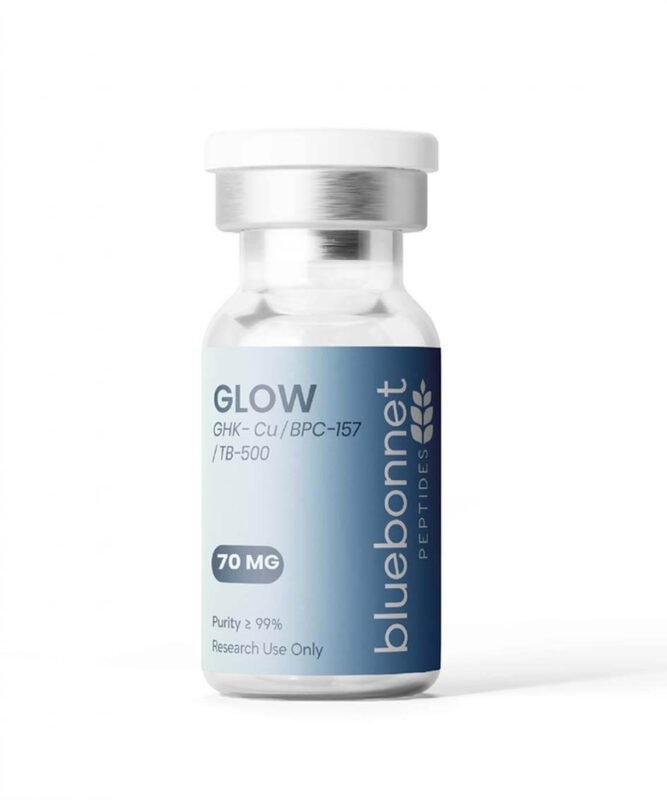
GLOW is listed as a three-component blend containing GHK-Cu, BPC-157, and TB-500. Review the individual product page for the current total amount, component breakdown, and available documentation.
Ipamorelin/CJC-1295 (No DAC)
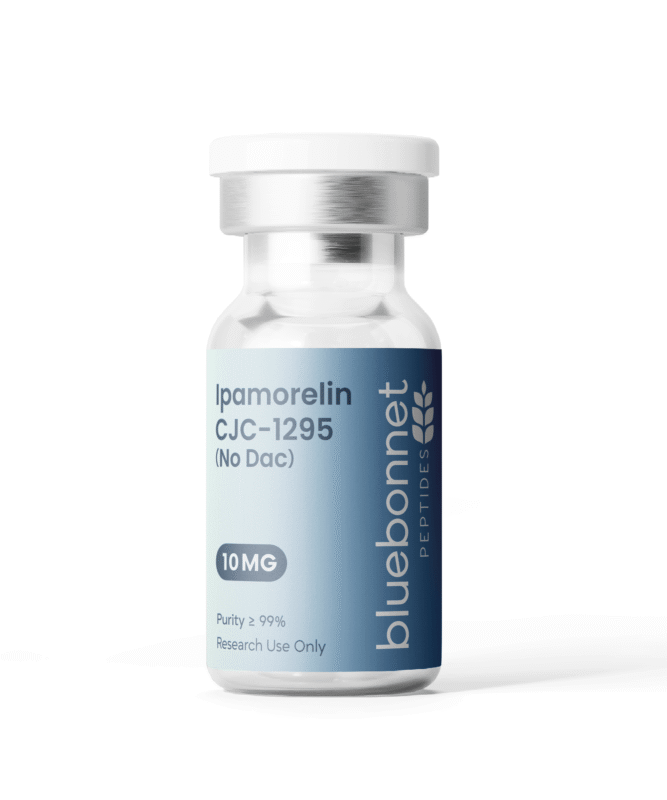
Ipamorelin/CJC-1295 (No DAC) is a two-component research blend containing Ipamorelin and CJC-1295 without DAC.
Comparing the Research Blends
Blend | Components Listed | Current Stated Amount |
|---|---|---|
KLOW | GHK-Cu, BPC-157, TB-500, KPV | 80 mg total |
Wolverine | BPC-157, TB-500 | 10 mg or 20 mg total |
GLOW | GHK-Cu, BPC-157, TB-500 | 70 mg displayed |
Ipamorelin/CJC-1295 (No DAC) | Ipamorelin, CJC-1295 (No DAC) | 10 mg total displayed |
Product Testing and Documentation
Bluebonnet product pages may provide purity-test or analytical-documentation links for individual blends. When reviewing a report, match the product name and available lot or batch information to the material being evaluated.
For a multi-component material, review what the report actually measures. A reported purity value should not automatically be interpreted as separate confirmation of the identity, amount, or purity of every component unless the report specifically documents those results.
Research Blends Frequently Asked Questions
What Is a Research Peptide Blend
A research peptide blend is a prepared laboratory material containing two or more specified peptide components. The exact composition and stated amounts depend on the individual product.
How Is a Blend Different From a Single-Component Material
A single-component material is identified by one listed peptide, while a blend contains multiple listed components in one formulation. A blend should be evaluated as the specific multi-component material described on its product page.
Does the Stated Amount Apply to Every Component
Not necessarily. A product page may show a total amount for the complete blend and a separate breakdown for the individual components. Researchers should not assume that the total amount applies to each component.
Can Results From One Blend Be Applied to Another Blend
No. Blends may differ in their components, relative amounts, documentation, and experimental context. Findings associated with one formulation should not automatically be applied to another.
Does One Purity Value Confirm Every Component in a Blend
Not automatically. The meaning of a reported result depends on the sample, method, and analytes described in the report. Review the complete document to determine what was evaluated.
Where Can Researchers Find Testing Information
Use the purity-test or documentation link shown on the applicable Bluebonnet product page. Confirm that the product and available lot or batch information correspond with the material being reviewed.
Are Research Blends Intended for Human or Animal Use
No. Bluebonnet Peptides products are intended strictly for laboratory research. They are not intended for human or animal consumption, clinical use, diagnostic use, therapeutic application, cosmetic use, or performance use.
Research Use Only
Bluebonnet Peptides products are intended strictly for laboratory research purposes. They are not intended for human consumption, veterinary use, therapeutic, diagnostic, medical, cosmetic, or performance use. Researchers should review material-specific documentation and establish procedures appropriate to their laboratory and experimental design. Review the full Research Use Only policy.